
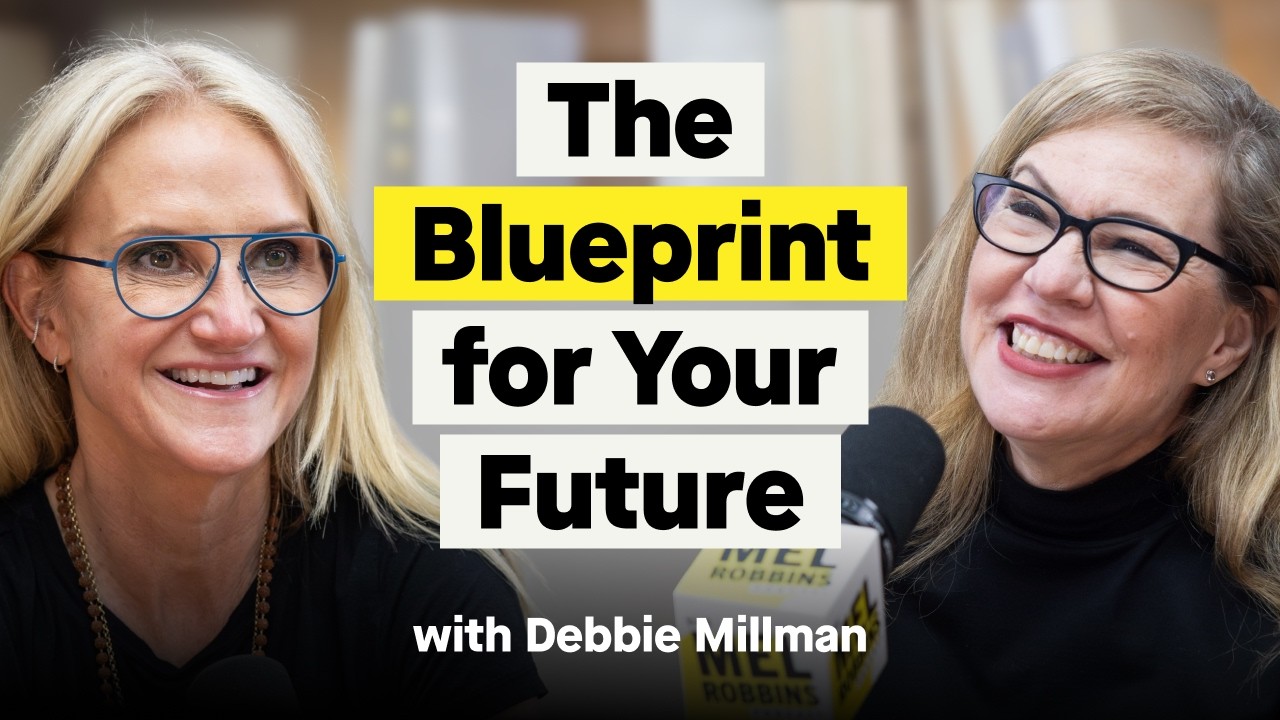
Picture this: you wake up one morning and realize your life is a patchwork of choices you barely remember making. Been there? I sure have—and let me tell you, it’s equal parts unnerving and motivating. What if, instead of letting life happen to us, we could become designers of our own existence? Not with Pinterest boards or to-do lists, but by applying the same creative thinking that artists and innovators use to build something out of nothing. That’s exactly what I stumbled on listening to Mel Robbins and Debbie Millman discuss the design thinking process—not just for business or branding, but for mapping out our lives. This isn’t about being confident; it’s about daring to want something different, and then getting curious enough to map the impossible. Ready to get a little uncomfortable and incredibly inspired? Let’s dig into the real-life design workshop you never knew you needed.
The Myth of Confidence and the Power of Intention
When you think about designing your life, what comes to mind first? For many, the answer is confidence. We’re told that if we just believe in ourselves, everything will fall into place. But what if that’s not the real secret? Debbie Millman, a leading voice in intentional living and personal growth, puts it plainly: “Confidence is overrated.” The truth is, you don’t need to feel sure of yourself to start making changes. What you need is intention.
Why Confidence Gets Too Much Credit
Most people see confidence as the fuel for action. But in reality, confidence often comes after you’ve taken the first step, not before. If you wait until you feel confident, you might never begin at all. Millman says,
“People determine what is impossible before they even try what is possible.”This mindset keeps us stuck. We talk ourselves out of trying, labeling our dreams as unrealistic before we’ve even made an attempt.
Change is hard. People hate change, and that’s not just a saying—it’s a fact of human nature. We crave comfort and predictability. When faced with the unknown, our brains look for reasons to stay put. This is why so many of us decide something is impossible before we give ourselves a chance to see what’s possible. The fear of wanting something deeply—and failing—is often stronger than the fear of staying the same.
Intention: The Real Catalyst for Personal Growth
So, if confidence isn’t the answer, what is? The answer is intention. Living with intention means making conscious decisions about what you want your life to look and feel like. It’s about choosing your direction, even if you’re not sure you’ll succeed. This is the heart of a design thinking mindset: you don’t need all the answers, just a willingness to experiment and learn.
Intentional living is not about having a perfect plan or being sure of every step. It’s about clarity. When you set an intention, you give yourself permission to want what you want. That desire becomes the spark for personal growth. Millman’s research shows that people who write down their life goals as part of a life design exercise achieve 80% of what they set out to do. That’s not because they were more confident than everyone else. It’s because they dared to name their desires and take action.
- Intention sets direction. It’s the starting point for any meaningful change.
- Action builds confidence. The more you try, the more you learn, and the more capable you feel.
- Clarity reduces regret. When you act with intention, you’re less likely to look back and wonder, “What if?”
Facing the Fear of Wanting
One of the biggest barriers to intentional living is the fear of wanting something deeply. Many people are afraid to admit what they truly desire. Why? Because wanting opens the door to disappointment. But not going after what you want can lead to a different kind of pain—regret. As Millman puts it, “You could not go after what you want and you could regret that and you'll never metabolize that regret. There's no closure. It's just infinite. It's infinite suffering.”
I remember the first time I tried to live “on purpose.” I wrote down my goals and intentions, but I couldn’t stop second-guessing myself. Was I being unrealistic? Was I setting myself up for failure? The doubts were loud, but I kept going. Spoiler: I survived, and I learned more from the process than I ever could have by standing still. The act of choosing my direction—even without confidence—was transformative.
Design Thinking Mindset: It’s Not Linear
Designing your life isn’t about following a straight path. It’s about living with clarity and decision, even when the way forward isn’t clear. The design thinking mindset encourages you to experiment, reflect, and adjust. You don’t need to know everything before you begin. You just need to be willing to try.
In the end, confidence is a byproduct of action, not a prerequisite. What truly matters is your intention—the conscious choice to pursue a life that feels meaningful to you. That’s where personal growth begins.
Learning to Think Like a Designer (Even if You’re Not One)
When you hear the word “design,” you might picture artists sketching, architects drafting, or creative teams brainstorming the next big thing. But the design thinking process isn’t reserved for the art world—it’s a way of approaching life itself. As Debbie Millman puts it,
“Design in its essence is about very deliberate decisions about how you want anything to exist.”That “anything” could be a product, a logo, a room, a meal, or even your day-to-day existence. The life design process is about intentionally shaping your reality, no matter your background or job title.
Design Thinking: Deliberate Decisions for a Meaningful Life
At its core, the design thinking process is about making choices on purpose. You don’t have to be a professional designer to use these principles. Anyone can apply them to create a meaningful life. Think of your life as a living room you get to redecorate. What would you move, toss, or add? This mindset shift—from passive living to active designing—opens up new possibilities. You’re not just reacting to what happens; you’re inventing what doesn’t exist yet.
- Intentionality: Every aspect of your life, from your morning routine to your relationships, can be designed.
- Possibility over Probability: Instead of asking, “What’s likely?” ask, “What’s possible?” This is where future visioning comes in.
- Experimentation: Designers test, iterate, and refine. You can do the same with your goals and dreams.
Design Principles for Everyone
Design isn’t about being an artist—it’s about deliberate, intentional creation. You already design more than you realize: your wardrobe, your workspace, your daily schedule. The life design process takes this further, helping you wake up to patterns, habits, and hopes you might have ignored. By approaching your life with a designer’s mindset, you build a roadmap for personal growth—even if you’ve never picked up a paintbrush.
- Apply design thinking to your relationships: What do you want more of? What needs to change?
- Redesign your routines: Which habits energize you? Which ones drain you?
- Explore your subconscious patterns: What beliefs or fears are shaping your choices?
The Power of Future Visioning: Milton Glaser’s Five-Year Essay
One of the most transformative exercises in the life design process comes from legendary designer Milton Glaser. For 50 years, Glaser asked his students to write an essay describing their ideal day five years in the future. As Debbie Millman recalls,
“Even though he was one of the most famous graphic designers... this class was the most important thing he was doing with his life.”
The instructions were simple but profound: Write out, in detail, what your life would look like if you could have, do, and be anything you wanted. Start from the moment you wake up and continue until you go to sleep. Take it seriously. Declare your desires out loud.
- Why does this work? Research shows that structured visioning exercises increase the likelihood of personal aspirations being realized. By imagining your future in detail, you clarify what matters and start to notice opportunities you might have missed.
- Debbie’s experience: After writing her own 12-page essay and a list of 20 goals, she forgot about it—until she discovered years later that she had achieved 80% of what she’d written. Teaching at the School of Visual Arts, publishing a book, and joining the AIGA board were all there, realized through intention and action.
Designing Your Life: A Transferable Mindset
Designing your life isn’t about confidence or artistic skill—it’s about admitting what you want and making deliberate choices. When you approach your life as something you can shape, you move from feeling stuck to seeing possibilities. Whether you’re a business owner, a parent, or someone searching for meaning, the design thinking process gives you tools to create a future that excites you.
Remember: Designing your life applies to more than creative work—it’s a transferable mindset that anyone can use to invent their future. The life design process is universal. You don’t need to be a designer to start thinking like one. All you need is the willingness to imagine, experiment, and make intentional decisions about what comes next.
Action Over Perfection: How to Actually Start Designing Your Life
When it comes to life design planning, there’s a myth that you need to feel confident or have everything figured out before you begin. In reality, waiting for the perfect moment is just another form of self-sabotage. As Debbie Millman wisely puts it, “You start by starting.” The truth is, the only way to unlock your personal aspirations is to take action—even if it feels awkward, uncertain, or messy at first.
Think of your first attempt at life design like assembling IKEA furniture without the manual. You might not know exactly where each piece fits, and your end result might not look like the showroom model. But it still holds your books. The point isn’t perfection—it’s movement. Progress in life design comes from small, intentional actions, not from waiting until you have all the answers or the “right” tools.
One of the most powerful life design tools is the act of reflection. This can be as simple as sitting with a journal, a notepad, or even your phone, and writing down your thoughts. Debbie Millman’s Remarkable Life Deck is a great example of how structured and abstract prompts can help you unlock your vision. The deck includes 30 cards with both clear, direct questions and more open-ended prompts. Whether you prefer to answer, “How do you define happiness?” or imagine “making the impossible possible,” the important thing is that you engage with the exercise in a way that feels natural to you.
There’s no single right way to use life design exercises. You might write on paper, type on your phone, or dictate into a voice memo. What matters is that you create a space—physical or mental—where you feel free to explore your dreams without judgment. Carve out a quiet moment, even if it’s just a few minutes, and allow yourself to envision your future. If you need a starting point, try the free life design companion download at melrobbins.com/designyou for guided prompts and exercises.
Debbie’s pro tip for life design planning is to be specific. Don’t just say, “I want to be happy” or “I want a better job.” Instead, anchor your vision in the details of daily life. She suggests starting with a future date—October 29th, 2035, for example—and describing your morning in vivid detail. Where are you? Who are you with? What does your bedroom look like? What do your sheets feel like? What do you eat for breakfast? Do you have pets, children, or a partner? How do you spend your day? The more specific you are, the more real your personal aspirations become.
It’s normal to feel a mix of excitement and fear as you do these life design exercises. You might worry that your dreams are too big, or that you’re not worthy of what you want. You might even feel stress just admitting what you desire. But as Debbie says, “Once you admit it out loud, I think that there’s a way that it somehow integrates into your own intentions.” The act of declaring your goals—writing them down or saying them out loud—helps solidify your intentions and brings you one step closer to making them real.
Remember, you don’t need fancy life design tools or a grand vision to get started. All you need is a willingness to imagine and act. The simple act of starting, even if it feels imperfect, is transformative. Reflection and action are the true catalysts for personal growth and intentional living. So, if you’re listening, watching, or reading this, you’ve already cracked something open. When you find a quiet moment to sit with your thoughts, you’ll be ready to take that first step—no matter how messy it might feel.
Designing your life isn’t about confidence or waiting for the stars to align. It’s about action over perfection, and the courage to start, right where you are, with whatever you have. Begin today, and let your life unfurl—one small, intentional step at a time.
TL;DR: You don’t need to be a designer—or even all that confident—to design your life. All it takes is intention, imagination, and the willingness to start, right where you are. These lessons (and a few quirky prompts) could change everything.
Post a Comment