

Two years ago, I witnessed a friend transform from an anxious, self-proclaimed 'average Joe' into a thriving business owner. His secret? He didn't chase wild startup dreams—he started with lawn mowing, landed local gigs, raided YouTube for skills, and constantly asked: 'Whose problem can I solve today?' If you feel stuck with no special skills, barely holding onto your job, or simply want a new income stream, this post is for you. We’re skipping the hype and diving straight into quirky, real strategies for achieving financial freedom in 2025, no guru-speak included.
1. Redefining Financial Freedom: Why ‘Boring’ Businesses Still Win
When you think about Financial Freedom 2025, it’s easy to picture tech startups, flashy apps, or viral online brands. But here’s a quick story: my neighbor started power washing driveways a few years ago—no fancy tech, just hard work, a reliable van, and smart pricing. Today, he’s running a six-figure business, all from a service most people overlook. This is the hidden power of so-called “boring” businesses.
Breaking the Myth: Excitement Isn’t Required
It’s a common belief that only exciting, cutting-edge startups can make you rich. But the truth is, practical service businesses—like cleaning, lawn care, or mobile car washes—solve real, repeatable problems that people face every day. These are Easy Business Ideas for Beginners because they don’t require advanced tech skills or massive startup capital. Instead, they rely on something you already have: the ability to spot a problem and offer a solution.
“I Don’t Have Any Skills”—Think Again
Many people worry they lack the right skills to start a business. But as the transcript points out, that’s rarely true. For example:
- You can mow lawns—there’s demand in every neighborhood.
- You can be a cleaner—homes and offices always need tidying.
- You can drive for Uber—if you have a license, you have a marketable skill.
These jobs might seem basic, but they’re the foundation of countless successful businesses. The key is realizing that Marketable Skills for Beginners aren’t just digital—they’re practical, hands-on, and always in demand.
Data Speaks: Steady Income, Recession Resistance
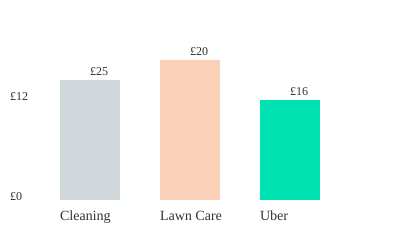
Let’s look at the numbers. Service businesses in maintenance and cleaning consistently deliver steady, recession-resistant cash flow. According to UK averages:
- Cleaning: £12–£25 per hour
- Lawn care: ~£20 per hour
- Uber driving: £10–£16 per hour (higher in busy cities)
While these rates might not seem sky-high, they offer predictable income and the potential to scale. Many entrepreneurs start solo, then hire help, expand their client base, and build a brand. The “boring” path can lead to financial independence faster than you might think.
The Business Formula: Person, Problem, Solution
"A business is three things: person, problem and solution."
Every business, no matter how simple, is built on this formula. You (the person) identify a pain point (the problem) and offer a way to fix it (the solution). Whether it’s a dirty driveway, an overgrown lawn, or someone needing a ride, these are all opportunities to build a business that works.
Business Problem-Solving Techniques: Simple, Tangible Wins
There’s a unique satisfaction in seeing the results of your work—a sparkling-clean kitchen, a freshly mowed lawn, or a happy customer stepping out of your car. These simple, tangible wins are the backbone of many “boring” businesses. They’re also proof that you don’t need to invent the next big app to achieve financial freedom.
Key Takeaways
- Don’t underestimate the value of practical, local services—they’re Easy Business Ideas for Beginners with real earning potential.
- Your everyday skills are more marketable than you think.
- Focus on solving repeatable problems for real people in your community.
- Financial freedom is often found in the most unglamorous places.
2. Mindset Over Magic Formulas: Stop Waiting for Instructions, Start Solving Problems
When it comes to Starting a Business Without Experience, many people search for a “business in a box”—a step-by-step guide that promises guaranteed success. But here’s the truth: entrepreneurship isn’t like following a school assignment. There’s no teacher handing out instructions, no answer key at the back of the book. If you’re waiting for someone to tell you exactly what to do, you’re thinking like an employee, not an entrepreneur.
"Looking for someone to tell you what to do is thinking like an employee rather than an entrepreneur."
Why ‘Business in a Box’ Doesn’t Exist
It’s tempting to believe that you can buy a ready-made business, plug it in, and watch the money roll in. But real businesses aren’t built from templates. They’re built by people who see a problem and decide to solve it—even when they don’t have all the answers. The world changes fast, especially as we head toward Financial Freedom 2025. Copying someone else’s plan rarely works, because the market, technology, and customer needs are always shifting.
Anecdote: The First Time You Fixed Something Without Instructions
Think back to the first time you tried to fix something without instructions. Maybe it was a leaky faucet, a broken bike chain, or a computer that wouldn’t start. You probably felt uncertain, maybe even frustrated. But when you figured it out, there was a weird satisfaction—you solved it your way. That’s exactly how real businesses start. There’s no manual, just a problem and your willingness to tackle it.
Problem-Solving Beats Copying Plans
In business, Business Problem-Solving Techniques matter more than following someone else’s blueprint. According to 2023 Forbes data, over 60% of successful first-time founders started by solving a problem they personally experienced. This means the path to financial freedom is less about finding a “perfect” idea and more about noticing pain points—especially those you understand firsthand.
- Health: People will pay to solve health problems.
- Relationships: People will pay to improve their relationships.
- Business: Businesses are often the easiest customers, because they have both the willingness and ability to pay for solutions.
The Real Question: Who Will Pay to Fix This Pain Point?
Instead of asking, “What easy business can I run?” start asking, “Who will pay to fix this pain point?” This shift is crucial. Not every problem is worth solving—focus on those that people are desperate to fix and have the resources to pay for. For example, businesses often have budgets set aside for solutions that save time, increase revenue, or reduce headaches. Targeting these customers can accelerate your path to Financial Freedom 2025.
Break Mental Barriers: Take Initiative
Many aspiring entrepreneurs feel stuck because they think they need permission, credentials, or a rigid step-by-step plan. The reality? No one is coming to hand you a roadmap. The most important skill is initiative—seeing a need and acting on it. Curiosity, resourcefulness, and a focus on the customer will carry you further than any pre-made playbook.
Tangent: Enjoying Uncertainty and the Joy of Figuring Things Out
Learning to enjoy uncertainty is a superpower. There’s a strange satisfaction in figuring things out on the fly. Every challenge you face is a chance to build confidence and resilience. The more you solve, the more you realize you don’t need all the answers to get started. This mindset shift—from waiting for instructions to actively solving problems—is at the heart of Starting a Business Without Experience.
As you move forward, remember: the entrepreneurial journey is about thinking independently, embracing uncertainty, and focusing on real problems. That’s how you build not just a business, but a lasting online empire.
3. How to Spot—and Upskill For—Lucrative Niches Fast (Without Going Broke)
From Minimum-Wage Gigs to Marketable Skills for Beginners
If you’re stuck in low-paying jobs like mowing lawns, cleaning houses, or driving for Uber, you might wonder: What skills for high-paying jobs can I learn without going broke? The good news is, the barrier to entry for in-demand tech and service skills has never been lower. Today, you can learn almost anything online—often for free—using platforms like YouTube and tools like ChatGPT. The real challenge isn’t access, but knowing which skills businesses will actually pay for.
Find Skills That Solve Expensive Problems
Here’s the secret: Businesses pay a premium for skills that either make them more money or save them significant time. As one expert put it:
"You could potentially come in with an AI consultancy type business or agency... massive trend and massive rise in the market."
If you can help a business earn an extra $100,000, they might happily pay you $80,000 or more. So, when choosing what to learn, ask yourself: What skill can I master that helps someone with money solve a painful problem?
Examples of High-Value, Learnable Skills
- AI Automation Business Ideas: Learn how to automate repetitive tasks for businesses using AI tools. Many companies are still wasting hours on manual work—if you can streamline their operations, you’re saving them money and time.
- Conversion Rate Optimization (CRO): This involves improving a website so it turns more visitors into customers. Skills include copywriting, A/B testing, and data analytics. Even a small boost in conversion rates can mean tens of thousands in extra revenue.
- Local Video Editing or Event Videography: Many small businesses and local events need affordable, quality video content for marketing. If you can shoot and edit videos, you can start pitching your services to local businesses.
- CRM Automation and Troubleshooting: Customer Relationship Management (CRM) systems are crucial for sales and support. Learning how to automate or troubleshoot these systems is a valuable, marketable skill for beginners.
Practical Steps: Learn, Practice, Pitch
- Start Learning Online for Free: Use YouTube, free online courses, and AI tools like ChatGPT to get foundational knowledge. Search for “AI automation tutorials,” “conversion rate optimization basics,” or “video editing for beginners.”
- Practice on Small Projects: Apply what you learn by working on your own website, helping a friend’s business, or volunteering for a local nonprofit. This builds your portfolio and confidence.
- Pitch Local Businesses: Once you have some results, reach out to local businesses or online entrepreneurs. Offer to automate a process, improve their website’s sales, or create a marketing video—often, you can start with a low-cost or even free trial to prove your value.
Case Studies: Real-World Upskilling Stories
- AI Automation Agencies: Many beginners have launched small agencies helping businesses automate tasks with AI, riding a “massive trend and massive rise in the market.”
- Copywriting for Higher Conversion Rates: Some have learned copywriting and CRO through free resources, then helped businesses double their online sales—earning a share of the increased revenue.
- Local Video Editing Startups: Others have started by filming local events or editing social media videos, quickly building a client base and raising their rates as their skills improved.
Wild Card: The 30-Day High-Value Skill Challenge
Imagine if you dedicated 30 days to learning a high-value skill—like AI automation or conversion rate optimization—using only free online resources. What could your life look like in a month? This “life experiment” approach lets you test small, scale up, and avoid big investments until you see results.
| Skill/Market | Growth/Impact |
|---|---|
| AI Automation Consulting | 13% CAGR projected by 2026 (Statista) |
| Conversion Rate Optimization | Can boost business revenue by 20-100% |
With so many marketable skills for beginners now accessible, the path from “boring beginnings” to online empire is clearer—and more affordable—than ever.
4. From Side Hustle to Serious Income: Finding and Landing Your First Customers
Turning your side hustle into a reliable income stream starts with one essential step: finding and landing your first customers. Whether you’re launching a freelance service, a creative gig, or a local business, the process is less about flashy ads and more about real conversations and strategic networking. Here’s how to move from “just starting out” to “in-demand” using proven methods and the power of your existing connections.
Quick Guide: Apply the ‘Rule of 30’ to Validate Your Idea
"In order to validate a business idea, you have to speak to 30 customers, or 30 potential people."
This simple rule—known as the ‘rule of 30’—is your first checkpoint. Before investing time and money, talk to 30 potential clients. These conversations help you understand real needs, test your pitch, and spot opportunities you might miss online. Don’t just send messages; have actual conversations, ask questions, and listen to feedback. This is the fastest way to validate your idea and refine your offer.
| Rule | What It Means |
|---|---|
| Rule of 30 | Reach out to 30 people to validate your business idea |
| Rule of 150 | Build a community of up to 150 for strong word-of-mouth growth |
Personal Anecdote: Building My Early Portfolio
When I started out, my first portfolio wasn’t glamorous. I filmed small events for friends, edited family vacation videos, and offered to capture birthday parties—all with my phone. These early projects gave me something real to show potential clients and, more importantly, built my confidence. Every gig, no matter how small, became a stepping stone.
Effective Networking for Entrepreneurs: Start with Your Immediate Network
Your first customers are often closer than you think. Friends, family, and acquaintances are your easiest first clients. Ask around: Who needs video content, a website, or social media help? Local small businesses, real estate agents, fitness trainers, and people planning events are all potential leads. Even if they can’t pay much at first, these projects help you build a portfolio for freelance services and gather testimonials.
- Offer trial or discounted work in exchange for honest feedback and permission to use the results in your portfolio.
- Request testimonials after each project to build social proof.
Creative Ideas: Document Milestones with Simple Tools
You don’t need expensive equipment to get started. Modern smartphones can produce professional-looking content. Offer to document milestones—birthday parties, graduation celebrations, new babies, or anniversary dinners. These are moments people want to remember, and they’re often willing to pay for someone to capture them.
Pro Tip: Partner with Other Service Providers
Collaboration is a powerful way to find your first customers. Team up with wedding planners, realtors, event coordinators, or local business owners. Offer your services as an add-on to theirs, or ask them to refer you to their clients. This approach taps into an existing stream of potential customers who already trust your partner.
Leverage Social Media and Local Hashtags
Showcase your work on platforms like Instagram, TikTok, and Facebook. Create simple videos or posts highlighting your style—event highlights, business promos, or portrait sessions. Use local hashtags and location tags to get discovered by people in your area. Social media isn’t just for building an audience; it’s a tool for connecting with people who need your services right now.
- Post regularly to stay visible.
- Share behind-the-scenes content to build trust.
- Engage with local businesses and community pages.
Building a Portfolio for Freelance Services: Use Early Gigs for Social Proof
Every project, no matter how small, is a chance to build your reputation. Collect testimonials, create case studies, and showcase your best work. Social proof is powerful—it reassures new clients that you can deliver results.
Remember, proactive outreach—especially within your existing network—is the fastest way to land your first paying projects. Focus on real conversations, creative offers, and building a portfolio that speaks for itself.
5. Investing Smarter: Turning Small Wins Into Long-Term Wealth (featuring Trading 212)
Why My First Dividend Payout—Less Than £1—Felt Better Than Earning £200 in a Weekend Side Gig
It might sound strange, but the first time you receive a dividend payout—even if it’s less than £1—can feel more rewarding than pocketing £200 from a weekend side hustle. Why? Because that tiny dividend is proof that your money is working for you, not the other way around. It’s a small but powerful reminder that financial freedom is built on passive income, not just active hustle. This is the essence of a smart Financial Game Plan: earn more than you spend, and invest the rest for your future.
Commission-Free Platforms Make Investing Less Intimidating
For most people, the idea of investing can be overwhelming. High fees, confusing interfaces, and the fear of losing money keep many would-be investors on the sidelines. That’s where platforms like Trading 212 come in. As one user put it:
"Trading 212 is a commission-free investment platform that I've been using for years at this point."
With zero commission fees, you can start investing without worrying about hidden costs eating into your returns. This is crucial when you’re just starting out and every pound counts. Maximizing your returns isn’t just about hustling harder—it’s about being smart and fee-sensitive with every pound you invest.
Diversify Your Portfolio Early: Invest in Your Future
It’s tempting to pour every penny back into your business or side gig, but true wealth comes from building multiple streams of income. Platforms like Trading 212 make it easy to Diversify Your Portfolio by investing in:
- Individual stocks and shares
- Index funds for broad market exposure
- Fractional shares, so you can invest in big companies with small amounts
By reinvesting your profits into these passive income assets, you’re setting yourself up for long-term growth. Remember, passive income doesn’t happen overnight—but starting small and letting compounding work its magic is the key to lasting wealth.
Trading 212 Investment Platform Features: Making Investing Accessible
Trading 212 stands out for its focus on accessibility and user-friendly features:
- Zero commission investing: Buy and sell stocks, ETFs, and more without paying trading fees.
- Fractional shares: Invest in high-priced stocks with as little as £1.
- Pies & Auto-Invest: Build diversified portfolios and automate your investments for hands-off growth.
- Multi-currency support: Hold and earn interest in up to 13 global currencies.
These features lower the barrier to entry and help you stick to your Financial Game Plan—even if you’re starting with small amounts.
Introducing the Trading 212 Card: Cashback, No Fees, and Seamless Integration
Trading 212 recently launched a new card that takes investing convenience to the next level:
- 1% cashback on all daily spending
- No monthly or hidden fees
- Currency conversions at the true interbank rate—ideal for travelers and online shoppers
- Direct integration with your Trading 212 invest account, so uninvested cash earns compound interest automatically
This card is perfect if you want to maximize every pound you spend and keep your investments growing in the background.
Comparing Popular Beginner Investment Platforms
| Platform | Commission Fees | Fractional Shares | Auto-Invest | Cashback Card | Multi-Currency Support | Sign-Up Bonus |
|---|---|---|---|---|---|---|
| Trading 212 | £0 | Yes | Yes (Pies) | 1% cashback | 13 currencies | Free share up to £100 |
| Freetrade | £0 (basic) | Yes | No | No | No | Free share up to £50 |
| Revolut | Limited free trades | Yes | No | Yes (varies) | 30+ currencies | No |
Platforms that promote accessibility—like zero commission, fractional shares, auto-invest, and cashback cards—make it easier than ever to Invest in Your Future and build wealth from even the smallest wins.
6. Wild Card Round: Myths, Tangents & Common Traps on the Road to Financial Independence
Myth-Busting: You’re Not ‘Too Late’ or ‘Unqualified’ to Start in 2025
One of the most persistent myths about achieving your Financial Independence Goals is that you need to start young, have a fancy degree, or be in a high-earning career. The truth? You’re not too late, and you’re not unqualified. The landscape in 2025 is more open than ever. Thanks to the explosion of Learning New Skills Online, you can pick up almost anything you need to know—often for free. As one expert puts it:
"It's really not that hard to learn a lot of these skills."
Whether you’re 22 or 52, the ability to adapt and upskill is what really matters. Resilience and constant learning are the real secrets to sustainable financial freedom.
Hypothetical Challenge: Could You Survive on Gig Work While Upskilling?
Let’s get real: not everyone is on a high-earning career trajectory. If you’re not, should you quit your job and start a business? Not necessarily. But could you survive on Uber, cleaning, or other gig work while you learn new skills and test Passive Income Ideas 2025? Absolutely.
- Gig work can buy you time and flexibility to experiment.
- It’s a crash course in customer service, time management, and hustle.
- You’ll quickly learn what problems people will pay to have solved.
This approach isn’t glamorous, but it’s practical. Many people have used gig work as a stepping stone to financial independence—especially when paired with focused skill-building.
Warning: Waiting for Certainty is the Fast Lane to Nowhere
A common trap is waiting for the “perfect” idea, the “right” time, or total certainty before taking action. The reality? Progress beats perfection every time. Financial independence is a process, not a one-off event. If you’re stuck in analysis paralysis, you’re not moving forward.
- Start with what you know—your current professional skills.
- Ask: Can you solve more expensive or painful problems for your employer or similar clients?
- Remember: Skills can always be learned. The challenge isn’t lack of skills, but lack of action.
Every month you wait is a month you could have been learning, earning, or both.
Unexpected Upside: Embracing Mistakes Speeds Up Learning
Here’s a secret: the fastest learners are often the biggest experimenters. Learning by doing (and failing) is usually more effective than endless planning. Mistakes aren’t setbacks—they’re data. They teach you what works, what doesn’t, and what to try next.
- Most small businesses fail in the first year—but skill stacking increases your odds of survival.
- Each failed side hustle is a mini-MBA in disguise.
- Embracing mistakes makes for better stories (and more resilience) later.
Tangents: The Joy of Small Wins, Odd Lessons, and Mini Experiments
Not every step on the road to financial independence is a straight line. Sometimes, the biggest breakthroughs come from the strangest tangents:
- The joy of your first small business win—no matter how tiny.
- Odd lessons learned from failed side hustles (like why people really buy what they buy).
- Mini experiments—trying out new platforms, products, or services just to see what happens.
Each experiment, win or lose, adds to your toolkit. The process of stacking skills, learning online, and trying new things is what sets successful financial independence seekers apart in 2025.
Key Takeaway
Don’t let myths or the fear of failure hold you back. The path to financial independence is paved with experiments, mistakes, and constant learning. In 2025, your willingness to try, fail, and try again is your greatest asset.
7. FAQ: Real Questions for Real-Life Financial Freedom Seekers (2025 Edition)
What’s the first step if I feel like I have zero experience?
The journey to financial freedom starts with action, not perfection. If you’re thinking, “I don’t have any skills,” remember: everyone starts somewhere. You already have more skills than you think. Can you mow lawns, clean, or drive for Uber? Those are all marketable services. The key is to get started, even with something simple. Many Easy Business Ideas for Beginners don’t require special training or fancy credentials—just a willingness to show up and learn as you go. The most important step is to take that first action, however small.
How do I know if my skill is valuable enough?
If someone is willing to pay for it, it’s valuable. You don’t need to be the world’s best at what you do. For example, local businesses need promotional videos, families want birthday parties filmed, and people need help with everyday tasks. As one entrepreneur put it:
"You don’t need anything other than a phone... and the ability to edit videos in like CapCut."The real value is in solving a problem or saving someone time. Start offering your service, even if it feels basic. You’ll be surprised how many people need what you can do.
Is it actually possible to freelance without a fancy setup?
Absolutely. The myth that you need expensive gear or a studio holds many people back. In reality, most social media content and even paid gigs can be done with just a smartphone and free or low-cost editing apps. Many successful freelancers started with nothing but their phone and learned editing on apps like CapCut or Instagram’s built-in tools. The best way to start Building a Portfolio for Freelance Services is by doing—offer to shoot a friend’s party, help a local coffee shop with a promo video, or document an event. Your first clients care more about the result than your equipment.
Where do I find legit customers who will pay?
Start with your immediate network. Friends, family, and acquaintances are often your easiest first clients. Think about who might need your service—local businesses, fitness trainers, real estate agents, or anyone planning an event. Even if you work for free or a small fee at first, these projects help you build a portfolio and get testimonials. Use social media to showcase your work and tag local businesses. Partner with related service providers—wedding planners, photographers, or event coordinators often need referrals. Remember, 50% of freelancers started with no portfolio (Upwork, 2022), but they built one by taking on real projects.
Should I prioritize saving, investing, or earning right now?
The answer depends on your current situation, but for most beginners, Invest in Your Future by focusing on earning first. You need cash flow before you can save or invest meaningfully. Once you have a steady income, start setting aside a portion for savings and then look into investment options. The key is to build habits early—track your earnings, set goals, and don’t be afraid to start small. Every dollar you earn and invest in your skills or business is a step toward financial freedom.
Are apps like Trading 212 safe and worth trying?
Trading apps like Trading 212 are regulated and widely used, but they’re not risk-free. They can be a good way to start investing with small amounts, but never invest money you can’t afford to lose. Focus on learning the basics first. Remember, investing is just one part of your financial journey—building skills and earning power often have a bigger impact in the early stages.
Wild card: Is it okay to fail at my first gig/business/idea?
Not only is it okay—it’s expected. Most successful entrepreneurs failed at something before they found what worked. Failure is feedback, not a dead end. Each attempt teaches you something new about yourself, your market, and your approach. The only real failure is never starting. So, embrace the process, learn from your mistakes, and keep moving forward. Your path to financial freedom is built on action, resilience, and a willingness to try again.
Financial freedom in 2025 isn’t reserved for the lucky or the already-skilled—it’s open to anyone willing to start, learn, and adapt. Whether you’re mowing lawns or building an online empire, your journey begins with a single step. Join the conversation, share your questions, and remember: your future is built by what you do today.
TL;DR: You don’t need a revolutionary idea or fancy credentials to reach financial freedom in 2025. Start with basic skills, hunt for problems you can solve, leverage learning platforms, aim for ‘boring’ high-value niches, and always invest your earnings wisely. It’s about action, not perfection.
Post a Comment