
Let me spill a secret: I used to dread introducing myself at networking events. My palms got sweaty, my mind—completely blank. Small talk? Torture. Turns out, I'm in good company: even Stanford MBAs froze under spontaneous questioning. But here’s the twist—the ability to think fast and speak smart isn’t magic or luck. It’s a trainable skill, and as I learned (the hard way), it’s a blend of psychology, improv, and a healthy dose of unexpected fun. This isn’t your dusty old communication advice. We’re flipping the script on what it means to talk on the spot, get past awkward moments, and emerge sounding like the smartest person in the room—even if you’re not sure what question’s coming next.
Why Spontaneous Talking Feels So Awkward (And Why Most People Get It Wrong)
If you’ve ever stumbled through a small talk introduction or blanked out during a meeting, you’re not alone. In fact, these moments are the pressure cookers of daily communication. While giving a planned speech or presentation is tough, speaking off-the-cuff—without preparation—is even tougher for most people. The truth is, most real-world communication is unplanned, improvisational, or reactive. As one expert put it,
“Most of our communication happens in the moment.”
Small Talk and Introductions: The Hidden Pressure Cookers
Think about the last time you had to introduce yourself to a group, make small talk at a networking event, or answer an unexpected question. These situations can feel awkward and uncomfortable. Why? Because you’re put on the spot to think and act quickly, often with little warning. Even at Stanford Business School, where students are trained for high-stakes environments, these moments cause anxiety. In fact, Stanford MBAs participate in required spontaneous speaking workshops during their first three weeks—because even the brightest students struggle with cold call fear and real-time questions.
Speaking Anxiety: The Universal Experience
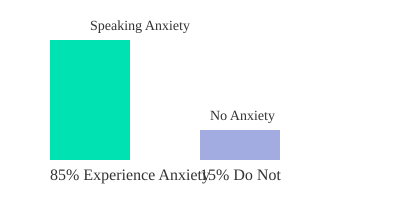
Research shows that 85% of people experience high-stakes speaking anxiety. That means almost everyone—including experts—feels nervous in these moments. As one instructor jokes,
“85% of people feel nervous in high-stakes situations and I think the other 15% are lying.”The nerves and blank moments you feel are universal. It’s not a personal failing; it’s a shared human experience.
Why Off-the-Cuff Speaking Is Harder Than Planned Presentations
- Unpredictability: You can’t anticipate every question or comment, so you have to think on your feet.
- No Safety Net: There’s no script or slides to fall back on. You’re relying on your memory and quick thinking.
- High Stakes: Whether it’s a job interview, a client meeting, or a classroom cold call, the pressure is real—and so is the fear of making mistakes.
At Stanford, professors noticed that even their best students would freeze or stumble when called on unexpectedly. This “cold call fear” is so common that it inspired the development of new communication skills workshops focused on helping students think faster and talk smarter in the moment.
Missing the Micro-Details: The ‘F’ Count Problem
When you’re speaking spontaneously, it’s easy to miss tiny details that can make a big impact. For example, in communication workshops, participants are often asked to count the number of times the letter ‘F’ appears in a sentence. Most people miss several, even though they’re right in front of them. This exercise shows how easy it is to overlook subtle cues or important information when you’re under pressure. In real conversations, missing these micro-details can change the meaning or outcome of your message.
The Perfection Trap: Why Trying to Be Perfect Makes Us Worse
One of the biggest reasons people struggle with spontaneous speaking is the drive for perfection. When you’re worried about saying the exact right thing, you become overly self-conscious. This self-evaluation actually reduces your cognitive bandwidth, making it harder to think clearly and respond effectively. In other words, the more you try to be perfect, the more likely you are to freeze, ramble, or miss the point entirely.
So, whether you’re a student at Stanford Business School or a professional in a high-stakes meeting, remember: speaking anxiety and cold call fear are normal. Most people get spontaneous talking wrong because they underestimate how tough it is—and they fall into the perfection trap. The good news? With the right strategies, you can learn to think faster and talk smarter in any situation.
From Fear to Focus: The Science of Managing Speaking Anxiety
Speaking anxiety is a universal experience—especially when you’re put on the spot. Your body reacts as if you’re under attack, triggering the classic fight-or-flight stress response. As one expert puts it,
“Your body sees speaking in the moment as being under threat and it invokes the fight or flight response.”If you’ve ever felt your heart race, your palms sweat, your mouth go dry, or your mind go blank before speaking, you’re not alone. Research shows that over 85% of people report anxiety in high-stakes speaking situations; the rest are probably just not admitting it.
Why We Get Nervous: The Body’s Stress Response
When you’re called to speak—whether in a meeting, on a Zoom call, or in front of a crowd—your body’s stress signals kick in:
- Blushing and sweating
- Dry mouth (while your palms get sweaty—a phenomenon called “plumbing reversal”)
- Rapid heartbeat
- Shaky hands
- “Brain blur”—freezing up or forgetting your words
These are normal, natural reactions. But the good news is, you can Calm, Unlock, and Redefine your experience with simple, science-backed strategies.
Physiological Hacks: Calm Your Body, Unlock Your Mind
Managing speaking anxiety starts with taming your body’s stress response. Here are proven tools used by top facilitators—even at Stanford:
- Deep Belly Breathing: Take a slow, deep breath into your belly (like in yoga or Tai Chi). Focus on the exhale—“My rule of lung: Exhale twice as long as you inhale.” Two or three of these breaths can slow your heart rate and help you speak more calmly.
- Cool Your Palms: If you blush or sweat, hold something cold (like a chilled water bottle) in your palms before speaking. Your palms are thermoregulators—cooling them helps reduce blushing and sweating.
- Dry Mouth Fix: Sip warm water, suck on a lozenge, or chew gum before you speak (not during). This reactivates your salivary glands and prevents dry mouth.
- Physical Movement: Walk around the building or room before your talk. Movement helps burn off nervous energy and brings you into the present.
Psychological Tools: Redefine the Moment
It’s not just nerves—future-focused fears are the real saboteurs. Worrying about what might go wrong (“What if I fail?”) triggers more anxiety than the act of speaking itself. The secret? Reframe the situation as an opportunity and snap your brain into the present.
- Presence Exercises: Listen to a favorite song or playlist, just like athletes do before a big game. This grounds you in the moment and shifts your focus away from negative future outcomes.
- Math Distraction: Try counting backwards by 17 from 100. This quirky exercise forces your brain to focus on the now, not the “what ifs.”
- Tongue Twisters: Warm up your voice and mind with a tongue twister. Try: “I slit a sheet. A sheet I slit. And on that slitted sheet I sit.” You can’t say it right unless you’re fully present!
- Connect with Others: Chat with someone before your talk. Engaging in conversation brings you into the present and away from anxious thoughts.
Drop Perfection: Redefine Success
Remember, dropping the need for perfection helps you nail the moment. Your audience is more focused on your message than your nerves. In fact, when you appear anxious, they often feel anxious too—what’s called second-hand anxiety. By managing your own anxiety, you help your audience focus and connect.
Post a Comment