
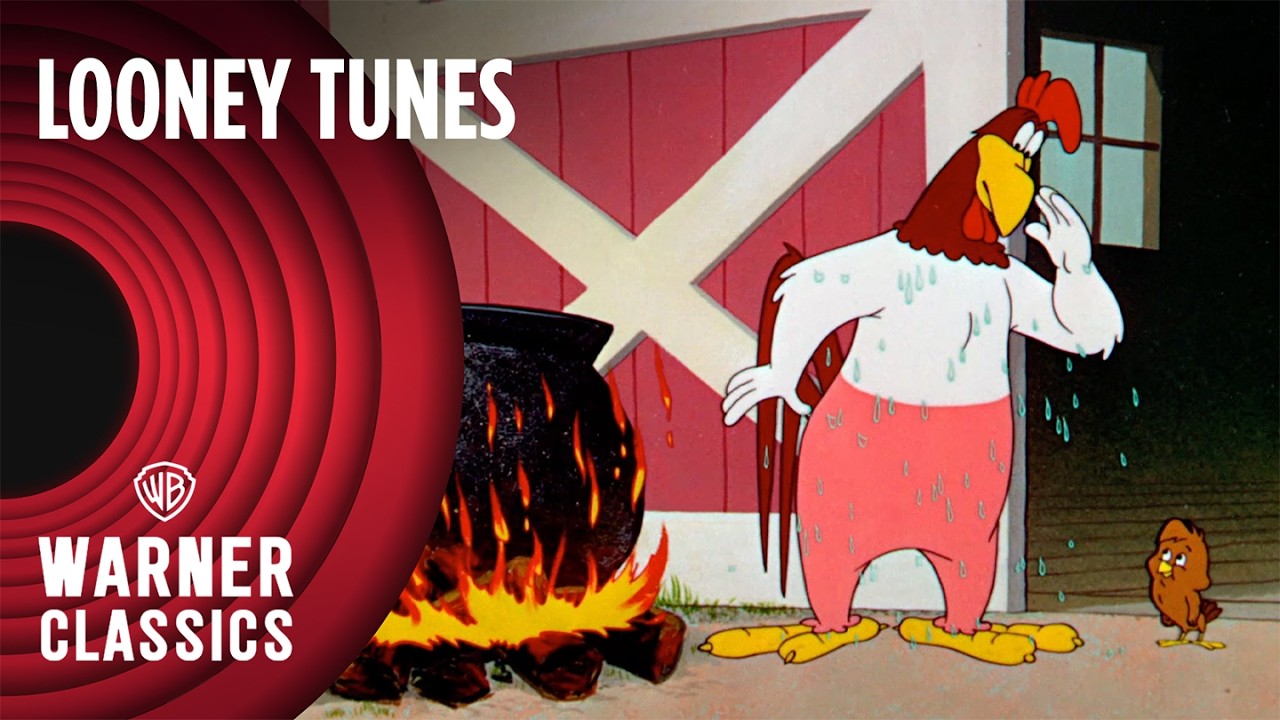
If you’ve ever wondered how a loudmouthed rooster became a Southern icon or why slapstick cartoons still tickle our funny bones, you’re in good company. As a kid, I remember being baffled by Foghorn Leghorn—partly because my own grandparents actually talked a bit like him (minus the feathers). Watching him bluster through a snowstorm or try and win over Miss Prissy was as much a Saturday ritual as pancakes and sticky syrup. Frankly, nobody mangles courtship or babysitting quite like Foghorn, making his Looney Tunes adventures a goldmine of real-life lessons (for better or worse).
The Cold, Cold Courtship – Winter Woes and Romantic Mishaps
When winter hits the Southern setting of the Looney Tunes barnyard, even the boldest rooster feels the chill. Foghorn Leghorn, known for his booming voice and slapstick humor, faces what he calls the “coldest, I say coldest winter on way here.” The classic cartoon’s barnyard is no place for a lone rooster when the wind starts howling and the air turns icy. Foghorn’s feathers are ruffled not by romance, but by the practical need to stay warm. As he puts it,
“If I was to spend another winter in this airond conditioned deep freeze, I'd freeze my tail feathers off.”
With survival on his mind, Foghorn Leghorn sets his sights on Miss Prissy’s cozy little roost. In true Southern style, he hatches a plan that’s equal parts charm and desperation. The courtship isn’t about love at first sight—it’s about finding a warm spot to ride out the winter. Foghorn’s romantic motivations are humorously practical, and his larger-than-life personality shines through every gesture.
Ingenious (and Absurd) Attempts at Romance
Foghorn’s approach to wooing Miss Prissy is a masterclass in classic cartoon slapstick humor. He tries every trick in the book to win her over:
- Flowers: Foghorn arrives with a bouquet, hoping to melt Miss Prissy’s heart—and maybe thaw his own frozen feathers.
- Candy: Sweet treats are offered as a bribe for a spot by the fire.
- Eyebrow-raising proposals: Foghorn doesn’t shy away from suggesting he’d make a great stepdad, pitching himself as the perfect addition to her family during the long winter nights.
Each attempt is more over-the-top than the last, blending Southern charm with the kind of physical comedy that made Foghorn Leghorn a classic cartoon icon. The barnyard rooster’s dramatic gestures are as much about escaping the cold as they are about impressing Miss Prissy.
Winter Desperation Meets Comedic Disaster
Of course, nothing goes quite as planned. Foghorn’s winter courtship is a series of romantic mishaps, each one funnier than the last. Whether he’s slipping on ice, getting locked out of the roost, or finding himself outsmarted by Miss Prissy, the slapstick humor never lets up. The cold weather only adds to the chaos, making every failed attempt at romance even more ridiculous.
These scenes highlight Foghorn Leghorn’s unique blend of bravado and vulnerability. His motivation may be practical—seeking warmth and comfort—but his methods are pure comedy gold. The Southern setting, with its frosty nights and cozy roosts, sets the perfect stage for Foghorn’s antics. As he tries to convince Miss Prissy he’s the rooster for her, the audience is treated to a showcase of classic cartoon humor, Southern charm, and the timeless struggle to find a little warmth in the coldest winter yet.
Parenting Lessons from the Poultry Pen—Foghorn as a Father Figure
When it comes to parenting lessons in the world of Looney Tunes characters, few are as memorable—or as delightfully disastrous—as Foghorn Leghorn’s attempts to play dad in the barnyard. The classic setup is simple: Miss Prissy will only consider marrying Foghorn if he can prove he’s a good father to her son, Junior. With his usual bluster, Foghorn boasts,
“I’m a natural-born father. Hey, where is the little fella at?”But as the episodes unfold, it’s clear that Foghorn’s fatherly instincts are as haphazard as his famous Southern squawk.
Miss Prissy’s Challenge: Prove Your Parenting Chops
Miss Prissy lays down the law: no wedding bells unless Foghorn can show he’s fit for parenthood. This sets the stage for a series of Foghorn Leghorn antics that turn the barnyard into a slapstick school of hard knocks. Foghorn’s confidence is sky-high, but his methods are anything but traditional.
Foghorn’s Teaching Style: Paper Airplanes and Pandemonium
- Paper Airplane Lessons: Foghorn tries to impress Junior by teaching him how to make a paper plane. “Come over here, boy, and I’ll show you how to make a nice paper aerial plane.” Of course, the plane never flies as planned, and Junior’s own version is met with Foghorn’s classic put-down: “That’ll never, I say, that’ll never fly.”
- Hide and Seek: Next up, Foghorn suggests a game of hide and seek, only to be outsmarted by Junior’s cleverness and gadgets. “Use a slide rule to find me in here. I don’t like that,” Foghorn mutters, bewildered by the boy’s intelligence.
- Mentoring Mayhem: Whether he’s teaching crowing (“First thing a rooster’s got to know is how to crow”) or the art of egg-sitting, Foghorn’s lessons always spiral into chaos. Each activity ends in comedic disaster, with Foghorn often left bandaged, baffled, or both.
Comedic Parenting and Unintended Consequences
The heart of these episodes is Foghorn’s well-meaning but misguided approach to mentorship. He tries to raise Junior—and even a lost chicken hawk—as proper chickens, insisting, “You are a chicken,” despite all evidence to the contrary. His attempts at bonding, whether through play or “life lessons,” usually backfire spectacularly. The barnyard becomes a stage for comedic parenting and misunderstood intentions, as Foghorn’s plans unravel in a blur of feathers and slapstick gags.
Recurring Themes in the Looney Tunes Barnyard
- Misunderstood Intentions: Foghorn genuinely wants to help, but his blustery style and lack of self-awareness lead to confusion and chaos.
- Mentorship Gone Awry: Each new lesson—whether it’s crowing, egg-sitting, or just playing outside—ends up as a fresh comedic disaster.
- Parenting Is Never Easy: Through Foghorn’s failures, the show reminds us that parenting, even for a “natural-born father,” is full of surprises, mistakes, and a whole lot of laughter.
In the end, Foghorn Leghorn’s parenting lessons are a masterclass in how not to mentor, but they’re also a loving tribute to the chaos and comedy of family life in the Looney Tunes barnyard.
Chicken Hawk Rivalries, Barnyard Bravado, and Slapstick Survival
When it comes to Chicken Hawk Rivalry in the Looney Tunes Cartoons, nothing beats the ongoing feud between Henery Hawk and Foghorn Leghorn. Henery Hawk’s relentless quest to nab a chicken—usually Foghorn himself—drives much of the slapstick humor and chaos that defines these classic episodes. From the moment Henery declares,
“I’m a chicken hawk and you’re my victim,”the barnyard transforms into a stage for wild chases, clever traps, and endless one-upmanship.
Henery Hawk: Small Bird, Big Ambition
Henery Hawk may be pint-sized, but his determination is unmatched. He bursts onto the scene with one goal: catch a chicken. Despite his size, Henery’s confidence never wavers. He’s quick to remind everyone, “I’m not a chicken. I’m a chicken hawk, and I smell chicken.” This overconfident bluster is the heart of the rivalry, as Henery’s plans often backfire in spectacular fashion, much to the audience’s delight.
Foghorn Leghorn Antics: Outwitting the Hawk
Foghorn Leghorn, with his booming voice and Southern bravado, is never one to back down from a challenge. He’s always ready with a new scheme to outsmart Henery, whether it’s teaching him how to crow, set on an egg, or even convincing him he’s not really a chicken hawk at all. Classic Foghorn Leghorn quotes like, “I say, I say, pay attention, boy!” punctuate these lessons, turning every encounter into a comedic masterclass in misdirection and barnyard bravado.
Slapstick Survival: Traps, Chases, and Barnyard Brawls
The rivalry is a goldmine of slapstick humor. Failed chicken traps, misguided lessons, and chaotic barnyard chases fill scenes from 8.49 to 30.02. Henery’s traps never quite work as planned—Foghorn is quick to demonstrate why, often by stepping right into the trap and then explaining its flaws. Physical gags abound: Foghorn gets launched, flattened, or tricked, only to bounce back with more bravado. The Barnyard Dog often joins the fray, adding another layer of rivalry and confusion, while Miss Prissy’s household sometimes gets caught in the crossfire.
- Henery Hawk’s endless schemes to catch Foghorn
- Foghorn’s creative (and often self-serving) “lessons” in being a chicken
- Barnyard Dog’s role as both rival and reluctant ally
- Recurring slapstick gags: duels, traps, and wild chases
What makes these Foghorn Leghorn antics so memorable is the blend of pride, rivalry, and persistence. Each failed plot is met with even more creative trickery and barnyard brawling, keeping the audience laughing and rooting for their favorite character. The dynamic between Henery Hawk and Foghorn Leghorn is a perfect example of how Looney Tunes Cartoons turn simple barnyard squabbles into epic, hilarious battles of wits and wills.
Wild Card: Southern Sayings, Cartoon Physics—and Did I Mention the Cement Mixer?
When I think about what makes Foghorn Leghorn stand out in the world of Looney Tunes Cartoons and other Warner Classics, it’s not just his size or his bluster—it’s his language. The barnyard is Foghorn’s stage, and he fills it with a steady stream of Southern idioms, quick-witted banter, and those classic Foghorn Leghorn quotes that stick in your head long after the credits roll. Who can forget the way he sizes up a situation with lines like,
“That woman’s as cold as a nudist on an iceberg.”It’s the kind of colorful phrasing that makes his comedic themes so memorable, and it’s a big reason why these classic cartoons are still so entertaining today.
But it’s not just the language that keeps us coming back. The world of Looney Tunes operates on its own set of rules—rules that are gleefully broken at every turn. Cartoon physics reign supreme here. One minute, Foghorn is teaching a chicken hawk how to crow from the top of a barn; the next, he’s dodging dueling pistols, getting chased by a cement mixer, or being launched sky-high by one of his own doomed inventions. The barnyard is a playground for the impossible, where paper airplanes fly with pinpoint accuracy, and a cement mixer in the hayloft is just another day at the office.
I have to admit, as a kid, I was completely taken in by these wild inventions and over-the-top antics. Who else tried building a cartoonish chicken trap in the backyard after watching Foghorn’s latest scheme? Just me? There’s something about the way these classic cartoons blend everyday barnyard life with the logic of a Saturday morning fever dream that makes them irresistible. The inventions are always creative, usually doomed, and endlessly entertaining—whether it’s a box of “widow kid stuff” or a cement mixer ready to cause chaos.
What ties it all together is Foghorn’s personality. His Southern charm, his quick comebacks, and his unshakeable confidence—even when he’s clearly out of his depth—give every episode a uniquely human (and feathered) flavor. The barnyard may be full of chickens, hawks, and the occasional lost squab, but it’s Foghorn’s voice that makes it all feel alive. His sayings aren’t just funny; they’re a kind of wisdom, delivered with a wink and a nudge that invites us all to laugh at life’s little disasters.
In the end, it’s this blend of sharp dialogue, unpredictable cartoon physics, and pure comedic energy that keeps Foghorn Leghorn and the Looney Tunes barnyard fresh—even for grown-ups. The jokes land, the inventions explode (sometimes literally), and the Southern sayings linger in your mind. So next time you hear someone say, “I say, I say,” you’ll know you’re in for a treat—one that’s as timeless as a rooster with a plan and a cement mixer in the hayloft.
TL;DR: Foghorn Leghorn’s barnyard escapades are more than just slapstick—they’re about creative problem-solving, flawed parenting, and how even Southern roosters struggle with family expectations. And somehow, it’s still hilarious.
Post a Comment