
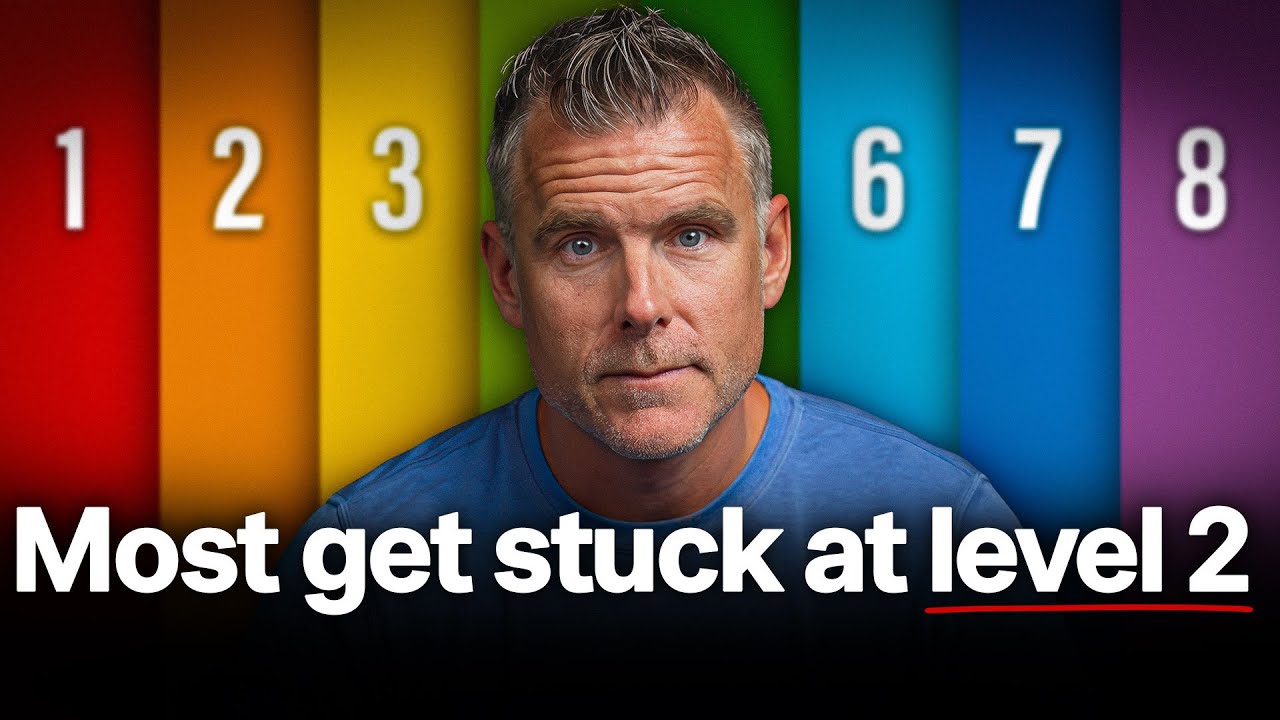
Let me tell you: The first time I heard someone say 'I only work 10 hours a week and my business makes millions,' I laughed so hard I nearly snorted coffee onto my keyboard. You know how it looks—red eyes, a laptop, a late-night hustle session. The myth of the 100-hour entrepreneur runs deep. But spend time with real heavy-hitters, and there's another way entirely. This post is my slightly off-kilter field guide to moving from overworked 'hustler' to hands-free 'operator,' sharing unexpected lessons from the business growth trenches (including why you should actually get bored sometimes, seriously). Expect wild analogies, real stories (like the one about the freelancer with 14 offers who sold only one), and a roadmap that's less about grinding, more about outsmarting the system at every stage of the journey.
1. The Lie of Perpetual Hustle: Debunking Entrepreneurship’s Greatest Myth (Startup Stage)
Think Working All Hours Is Required? Here’s Why That’s Outdated—Straight from the Trenches
When you picture an entrepreneur in the Startup Stage, you probably imagine someone burning the candle at both ends—late nights, early mornings, and barely a moment for family or friends. The myth says you must grind 100 hours a week to make it. But here’s the truth: the most successful founders don’t hustle endlessly. They work smarter, not harder, and they get results by focusing on what matters most.
As you move through the Business Growth Stages, you’ll notice that top entrepreneurs—yes, even billionaires—don’t fill every hour with busywork. Instead, they master each level, avoid the hamster wheel, and build real freedom. If you’re stuck hustling, you’re not alone. But you don’t have to stay there.
Entrepreneurs Get Stuck Selling Time, Doing Everything: Classic 'Hustler' Pitfall at 100k-300k (Startup Stage)
In the Startup Stage (typically $100k–$300k in revenue), you’re likely wearing every hat: sales, marketing, delivery, even admin. This is the “hustler” phase, and it’s where most founders get trapped. You’re selling your time, proving your value, and doing it all yourself. It’s exhausting, and it’s easy to confuse busyness with progress.
“It’s the proof, not the polish.”At this stage, your main job is to prove you can deliver value—not to make everything perfect. You’re building your product, validating your market, and acquiring those crucial first customers. But if you don’t learn to move beyond this phase, you’ll never get the freedom you started your business for.
Focus Is the Antidote: The Scaling Credo for Revenue Growth
So, how do you escape the endless hustle? The answer is focus. Enter the Scaling Credo—a simple but powerful framework for early-stage scaling strategies:
- One Ideal Customer Profile (ICP): Pick a single target customer with a pain your product solves.
- One Product: Don’t juggle 14 offers. Sell one thing, and get great at it.
- One Conversion Tool: Use one sales process. At this stage, it’s usually you talking directly to buyers.
- One Channel: Choose one marketing channel for awareness and stick with it.
- One Year: Do all four, relentlessly, for a full year.
“I dare you to focus for one year on four things and just hit it back to back to back.”This is how you move from hustling to scaling. Every time you’re tempted to add more, stop. The path to revenue growth is paved with discipline, not distraction.
Actual Experiment: The Freelancer Who Slashed 14 Offers to One
Let’s make this real. A freelancer I coached was stuck at $100k–$150k. He was offering 14 different services, but sales were slow. We sat down and asked three questions:
- What are you great at?
- What do you love to do?
- What does the market want?
He cut everything except one offer: building websites for local gyms. In 30 days, he sold 10 websites. The money and confidence followed. It wasn’t glamorous, but it worked. This is the power of focus in the Startup Stage.
Crucial Early Skills: Sales Conversations, Messaging, and Repetition
At this stage, your technical skills matter—but not as much as your ability to communicate and sell. Here are three daily non-negotiables that will accelerate your growth:
- 3 Daily Posts: Speak to your camera, share stories, and get better at communicating your value.
- 5 Daily Outreaches: Message five people—followers, new contacts, or mentors. Build relationships. The more hands you shake, the more money you’ll make.
- 1 Offer Made Daily: Make one offer for your product or service every day. Repetition builds skill and confidence.
If you make one offer a day for 10 days, you’ll likely land a sale. Consistency beats intensity.
Optional Wild Card: Embracing Purposeful Boredom (Why Doing Less Pays Off)
Here’s the secret most won’t tell you: monotony is a feature, not a bug. The Startup Stage is about doing the same things, over and over, until you get results. It might feel boring, but that’s where the magic happens. Chasing shiny new ideas only distracts you from what actually works.
If you can embrace the “boring” routines—focused offers, daily outreach, consistent messaging—you’ll outsmart the hamster wheel and set the stage for real business growth. Remember, delegation strategies and scaling come after you’ve mastered this focus. For now, do less, better.
2. Never Be the Bottleneck: Delegation, Buyback, and the Microwaveable Business (Growth Stage)
Welcome to the Growth Stage: From Chaos to Conductor
Hitting the Growth Stage (revenue between $300k and $1M) means you’re no longer just getting by—you’re in demand. Your marketing is working, leads are flowing, and your calendar is packed. But here’s the catch: you’re now the bottleneck. If you feel like you’re running a restaurant and trying to take orders, cook, and serve all at once, you’re not alone. The business can’t grow if everything depends on you.
This is the ‘specialist’ phase. The only way to scale is to free yourself from calendar chaos and become a true leader. Delegation is NOT an optional luxury—it’s table stakes.
Delegation Strategies: Why Your First Must-Have Hire Is an Executive Assistant
If you’re still answering every email, scheduling every meeting, and handling every admin task, you’re “playing entrepreneurship on hard mode.” At this stage, hiring an executive assistant (EA) is not a nice-to-have—it’s a must. Your time is too valuable to spend on low-leverage work. The moment you can afford it, make this your first hire. Effective delegation is the only way to move from being the business to building the business.
Case Study: How Sarah Bought Back Her Time—and Saw Revenue Pop
Let’s talk about Sarah, a design shop owner. She was stuck in the weeds, answering emails late into the night and feeling overwhelmed. She reached out for help, and the solution was simple: hire an executive assistant to handle admin work. Within 30 days, Sarah gained back 20 hours per week. The result? Her revenue increased. Why? She finally had time to focus on marketing and sales—the activities that actually grow her business.
“Anytime I feel overwhelmed, my calendar has turned into chaos.”
The Buyback Loop: Your Framework for Getting Unstuck
To break free from being the bottleneck, use the Buyback Loop. This simple but powerful framework helps you reclaim your time and reinvest it where it matters most.
- Audit: Start with a time and energy audit. List out everything you do in a week. Identify the tasks that drain you or don’t generate revenue. These are the first to delegate.
- Transfer: Once you know what to offload, it’s time to hand it over. Use the Camcorder Method: record yourself doing the task. These videos become instant training materials for your new hire, who can watch, learn, and even create standard operating procedures (SOPs) from your recordings.
- Fill: Don’t let your reclaimed time go to waste. Immediately fill your calendar with high-value activities—sales calls, strategic planning, or skill-building. This is how you move the needle in your business.
Repeat this loop whenever you feel overwhelmed. Each cycle frees you up to focus on higher-level work and business growth.
Are You the Bottleneck? The Ultimate Test
Here’s a simple test: Can your business run if you go off-grid for a day? If the answer is no, you’re still the bottleneck. Your goal is to build a microwaveable business—one that can heat up and run without you constantly stirring the pot. This means building systems, delegating effectively, and trusting your team.
The 10-80-10 Rule: From Solo Act to Conductor
To truly master delegation strategies, use the 10-80-10 Rule:
- First 10% (Ideation): You set the vision and outline the plan. Be clear about what success looks like.
- Next 80% (Execution): Your team or assistant executes the plan. Let them handle the details and the heavy lifting.
- Final 10% (Polish): You review, refine, and put on the finishing touches. This is where your expertise adds the most value.
Remember, 80% done by someone else is 100% amazing. Perfectionism is the enemy at this stage. Your job is to become the conductor, not the soloist.
Mindset Shift: The Value of Your Time
True delegation requires a mindset shift. You must recognize that your time is your most valuable asset. Every hour you spend on low-value tasks is an hour you’re not growing your business. As you move through the Growth Stage, your focus should be on leadership, strategy, and revenue-generating activities.
“Not having that person [assistant] is kind of playing entrepreneurship on hard mode.”
Action Steps: Start Today
- Do a time and energy audit this week.
- Identify your first “buyback” tasks—admin, scheduling, email.
- Record yourself doing these tasks (Camcorder Method).
- Hire an executive assistant and hand off the recordings.
- Reinvest your freed-up hours into high-value business operations.
Want a shortcut? Grab the Executive Assistant Playbook to see exactly what you can delegate and how to get started.
3. Order from Chaos: Systems, Standards, and Avoiding the Laundromat Blues (Expansion Stage)
Crossing the $1M Mark? Welcome to the Operator Stage (1M–3M Revenue)
If you’ve crossed the seven-figure mark, congratulations—your business is officially “real.” But with this new territory comes a new risk: creeping chaos. The Expansion Stage, or Operator Stage, is where many founders get stuck. You’ve built a strong business, but it feels like you’re constantly putting out fires. If your days are filled with urgent requests, last-minute fixes, and endless questions from your team, you’re not alone. The truth? This level of chaos is not normal, and it’s a sign your business operations need an overhaul.
Why Chaos Creeps In: The Danger of Custom Everything
At this stage, your biggest threat isn’t competition—it’s the lack of repeatable systems. If every client onboarding feels like a custom project, you’re sabotaging your ability to scale. Think about it: if laundromats had to invent a new washing process for every load, they’d go out of business. Instead, they rely on predictable cycles—wash, rinse, dry, fold. The same process, every time. That’s the secret to operational efficiency and business scaling.
Wild Analogy Alert: Make Your Business Run Like a Laundromat
You want your business humming with the same predictability as a laundromat. Clothes go in, they’re washed, rinsed, dried, and folded—no matter if it’s t-shirts or socks. This rhythm is what you need to create in your business. When you standardize delivery, you reduce stress, increase profits, and free up your time.
The 4 S’s Framework: Your Roadmap to Sustainable Growth
To move from chaos to order, use the 4 S’s Framework: Scope, Steps, Standards, Scorecard. This systematic approach is your ticket to sustainable growth and operational efficiency.
- Scope: Define exactly what needs to be done. Be specific about the outcome you expect—what does “done” look like? The clearer your definition, the more likely your team will deliver what you want, the first time.
- Steps: Outline the workflow. Break down the process into a sequence of actions. This is where you create checklists and playbooks. Remember, “Without a system, nobody else can do the thing, your magic sauce without you involved.” Systems aren’t just for big corporations—they’re your key to freedom.
- Standards: Set the quality bar. Standards aren’t what you say—they’re what you enforce. If you request a clean kitchen but never hold anyone accountable, that’s not a standard. Enforce rules and principles so your team knows what’s expected, every time.
- Scorecard: Track performance. Create simple ways for your team to measure their results. Scorecards provide accountability and make it clear when the work meets your expectations (and when it doesn’t).
Real-World Example: How Revio Streamlined Onboarding and Boosted Profits
Let’s look at a real business that nailed this transition. Revio, an AI-powered chat sales software, struggled in the Expansion Stage. Every new customer got a custom onboarding experience, which led to chaos and high churn. After implementing a standardized onboarding process—mapping out the steps, setting clear standards, and tracking results—Revio cut churn by 50% and raised prices by 20%. The founder’s feedback? The business became much more fun (and profitable) to own.
Key System Feature: Standardized Delivery
Standardized delivery is the backbone of business scaling. If you’re still reinventing the wheel for every client, you’re burning time and money. Instead, design a repeatable process for onboarding, fulfillment, and support. This not only improves operational efficiency but also makes it easier to train new hires and maintain quality as you grow.
Your New Role: From Firefighter to Process Champion
In the Operator Stage, your job shifts. You’re no longer the chief firefighter—you’re the process champion. This is when you start hiring team members specifically for delivery, while you focus on marketing and sales. As one expert put it:
“At this level, this is where you hire someone for delivery and all you do is market and sell.”
By building strong systems, you step out of daily operations and into the driver’s seat of growth.
Pro Tips: Frameworks for Standardizing Operations
- 10-80-10 Rule: You set the vision (first 10%), your team executes the process (next 80%), and you review and refine (final 10%). This keeps you out of the weeds while ensuring quality.
- Growth Triangle: Balance systems, people, and strategy. All three are essential for predictable revenue and sustainable growth.
- 40-40-20 Rule: Allocate your focus: 40% on systems, 40% on people, 20% on strategy and innovation.
Enforcing Standards: The Key to Accountability
Remember, standards only matter if you enforce them. Don’t just ask—hold your team accountable. Whether it’s a clean kitchen or a flawless client handoff, consistent enforcement is what turns chaos into order.
Summary Table: The 4 S’s at a Glance
| Step | What It Means | Why It Matters |
|---|---|---|
| Scope | Define the outcome and expectations | Ensures clarity and alignment |
| Steps | Document the workflow | Makes processes repeatable |
| Standards | Set and enforce quality rules | Drives consistency and accountability |
| Scorecard | Track and measure performance | Enables improvement and scale |
The Expansion Stage is where systems make or break your business. Build your laundromat—predictable, repeatable, and scalable—and watch chaos give way to growth.
4. Predictable Growth Engines: The Growth Triangle and the End of Gambling (Scaling Your Business)
Once you’ve crossed the $3M revenue mark, you’re no longer just a founder—you’re a growth creator. This is the stage where scaling your business means moving from hope and hustle to building systems that deliver steady, predictable growth. If you want to reach $10M and beyond, it’s time to stop gambling and start engineering your own luck with a repeatable growth engine.
Beyond $3M: From Gambler to Growth Creator
At this level, the stakes are higher. You can’t afford to rely on a single channel or hope that what worked before will keep working forever. Imagine your business as a plane: if you’re flying with just one engine and it fails, you’re in trouble. But with three or four engines, you can keep flying even if one breaks down. That’s the mindset shift you need—diversify your customer acquisition channels so your growth is never at risk from a single point of failure.
Ask yourself: If I handed you $1M to invest in your business, could you confidently turn it into $3M in six months? If your answer is vague, it’s a sign you’re still gambling. To scale, you need a system that turns inputs (money, time, effort) into predictable outputs (leads, sales, revenue).
The Growth Triangle: Your Predictable Growth Engine
The Growth Triangle is a simple framework to ensure your business never relies on just one growth channel. It’s made up of three legs:
- Inbound Magnet: Attract leads by educating your market for free.
- Outbound Megaphone: Proactively reach out to potential customers.
- Partner Program: Leverage trusted connections to access new audiences.
1. Inbound Magnet: Educational Content for Leads
Start by creating content that teaches your audience how to solve their problems—even before they pay you. This could be blog posts, videos, webinars, or downloadable guides. The goal is to build trust and authority, turning your expertise into a magnet for qualified leads. What’s powerful here is that this same content can also train your internal team, making your processes more consistent and scalable.
For example, if you’re in SaaS, record short videos answering the top questions your sales team hears. Not only does this attract new leads, but it also shortens your sales cycle and improves team performance.
2. Outbound Megaphone: Proactive Outreach
Don’t wait for leads to come to you. Build an outbound system where you or your team reach out directly to potential customers. This could mean cold emailing, LinkedIn outreach, or working with lead generation agencies. The key is a service-first approach: reach out to see if there’s a problem you can help solve, not just to pitch your product. This creates conversations, not just contacts.
3. Partner Program: Leveraging Trusted Connections
Strategic partnerships are one of the most powerful business scaling tips at this stage. Find businesses or influencers who already have the trust of your ideal customers. Structure referral deals where you pay a fee for every new customer they send your way. This not only expands your reach but also adds a layer of predictability to your growth engine. Partnerships can also open doors to new geographic markets, product lines, or even acquisition opportunities as you scale.
Case Study: Lawn Care Software Company
Consider the story of a lawn care software founder who was heavily dependent on paid ads. If ad performance dropped, so did revenue—classic “one engine” risk. By turning some of his ad content into educational blog posts and answering real customer questions, he created an inbound magnet. This not only generated organic leads but also improved ad performance, since prospects were already warmed up. As a result, his business became less vulnerable to ad platform changes and enjoyed steadier, more predictable growth.
Key Hire: Head of Demand Generation
To truly scale, you need someone dedicated to building and managing your growth engine. This is where a Head of Demand Generation comes in. Their job is to oversee all campaigns, drive traffic, and ensure conversions keep coming day after day. You might still be the face of the company, but this person is accountable for making sure your pipeline is always full. This frees you to focus on sales and leadership—the two areas that matter most at this stage.
Scaling Your Business: Double Down on What Works
At the $3M-$10M stage, the secret isn’t inventing new tricks—it’s doing a lot more of what’s already working. As one founder put it:
“To go from 3 to 10, it’s not doing anything different, it’s just doing a lot more of what’s working and scaling that to eight figures.”
Systematize your lead generation, diversify your growth channels, and build a team that can execute consistently. That’s how you end the gambling and create a business that scales with less stress and more predictability.
5. Unexpected Allies: Boredom, Mistakes, and the ‘New Devil’ Principle
Purposeful Boredom: The Secret to Business Efficiency
When you picture business growth stages, you might imagine constant hustle, new ideas, and a never-ending to-do list. But here’s the real secret: purposeful boredom is your best friend. Repetition and routine—doing the same things well, over and over—are what actually build sustainable growth. It’s not glamorous, but it’s how you create a business that runs like a cash machine instead of a hamster wheel.
Many entrepreneurs get stuck because they chase excitement and variety. They think, “If I’m not launching something new, I’m not growing.” But the truth is, frantic multitasking kills business efficiency. The most successful business owners focus on a few key activities, repeat them until they’re boring, and only then do they scale up. Monotony in your operations is a sign that things are working. If your days feel a bit repetitive, you’re probably on the right track.
Every Level, a ‘New Devil’: Personal Evolution Required
As you move through the stages of business growth, you’ll notice something strange: what got you to your current level won’t get you to the next. Each stage introduces a ‘new devil’—a fresh set of challenges that require you to evolve. This isn’t just about new tactics or tools. It’s about changing your mindset and habits.
‘New level, new devil.’
For example, when you’re hustling to your first $100k, you do everything yourself. But to reach $1M, you have to delegate, systematize, and let go of control. That’s uncomfortable. It feels odd to stop doing what made you successful so far. But if you don’t, you’ll stay stuck, working harder and harder for diminishing returns.
The Emotional Struggle: Letting Go and Facing Boredom
Let’s be honest: letting go is hard. When you first start delegating, clarifying your processes, and sticking to routines, it can feel like you’re losing your edge. Many entrepreneurs experience inner resistance—fear that things will fall apart if they’re not personally involved in every detail.
But here’s the truth: letting go is the only way to grow. You have to trust your systems and your team. The emotional discomfort is a sign you’re moving in the right direction. If you’re feeling bored, it’s probably because you’ve finally created repeatable processes that work. That’s not a problem—it’s progress.
Mistakes: Your Best Teachers
Mistakes are not just inevitable—they’re necessary. Every business owner has stories of failed experiments and wasted time. The key is to treat mistakes as feedback, not failure. If you’re not making mistakes, you’re not pushing yourself or your business forward.
Here’s a real example: I once spent a month trying to automate my taco truck’s napkin inventory. I built spreadsheets, set up reminders, and even tried to integrate a sensor system. The result? Total chaos. Orders got missed, customers complained, and my stress levels soared. Finally, I dropped the whole project and focused on core processes—ordering napkins once a week, by hand. Profits doubled in two months. The lesson? Stick to what matters, and don’t be afraid to abandon distractions.
When You’re Stuck, Get Uncomfortably Focused
If you feel stuck in your business, it’s probably time to get uncomfortably focused. That means doubling down on what works, even if it feels boring. Stop chasing shiny objects. Instead, ask yourself:
- What are the few activities that drive most of my results?
- Where am I resisting routine or delegation?
- What mistakes have I made recently, and what can I learn from them?
Remember: repetition builds cash machines, not new distractions. The more you systematize and standardize, the more freedom and profit you create. Boredom is a sign you’re doing the right things, efficiently and consistently.
Entrepreneurial Evolution: Mindset Over Tactics
After a certain point, business growth isn’t about finding the next hack or tactic. It’s about evolving your mindset. You have to become the kind of leader who embraces process-driven growth, who values sustainable systems over constant novelty, and who sees boredom as a badge of honor.
Each new stage brings a new devil—usually inside your own head. The challenge is to outgrow your old habits and beliefs, so you can build a business that lasts and creates a legacy.
If you’re feeling stuck, it’s probably time to get uncomfortably focused (and maybe bored).
FAQ: Real-World Questions About Business Growth Stages (An Unfiltered, Human Take)
Let’s get real about the journey through the business growth stages. There’s a lot of noise out there—stories of all-nighters, endless hustle, and entrepreneurs burning out before they ever see sustainable growth. But what actually matters at each stage? Here’s an unfiltered, human take on the questions you’re probably asking as you move from the Startup Stage to scaling a business that doesn’t run you into the ground.
Q: Is brutal hustle always necessary in the Startup Stage?
It’s easy to believe the myth that the only way to get your business off the ground is to sacrifice sleep, relationships, and sanity. But here’s the truth: focus and discipline outperform sleep deprivation every time. In the early days, yes, you’ll wear every hat and probably work more than you want. But the real winners aren’t the ones who out-hustle everyone—they’re the ones who get crystal clear on their ideal customer, their single best offer, and the one channel that brings in results. Big wins come from clarity, not chaos. If you’re feeling overwhelmed, try narrowing your focus instead of expanding your to-do list. Sustainable growth starts with saying “no” to distractions and “yes” to what actually moves the needle.
Q: Do I really need an assistant before hitting $1M?
If your calendar looks like a dumpster fire and you’re drowning in admin, the answer is almost always yes. An executive assistant (EA) isn’t a luxury at the growth stage; it’s a necessity. Think of it this way: every hour you spend scheduling, invoicing, or answering routine emails is an hour you’re not selling, marketing, or building. The right assistant pays for themselves in reclaimed revenue and sanity. If you’re hesitating because you don’t know what to delegate, start with a simple time and energy audit. Document what drains you, record yourself doing it, and hand it off. The sooner you buy back your time, the faster you’ll move through the expansion stage and into real scaling.
Q: How do I know I’m the bottleneck vs. the engine?
This is the classic founder trap. If you step away and the business grinds to a halt, you’re not the engine—you’re the bottleneck. The solution? Document and delegate. Use tools like the camcorder method: record yourself doing repeatable tasks, then have your team create standard operating procedures (SOPs) from those videos. If you’re still the only one who can close deals, onboard clients, or solve fires, it’s time to let go. The goal at this stage is to build a business that runs without you, not because of you. That’s how you escape the hamster wheel and unlock true sustainable growth.
Q: What’s the best system for onboarding as you scale?
Here’s where most businesses get stuck: custom solutions for every new client. It feels helpful, but it’s a recipe for chaos. The answer is to standardize your processes. Think laundromat, not bespoke tailor. Every customer should go through the same onboarding steps, with clear scope, checklists, and standards. When you systematize delivery, you not only save time and reduce errors, but you also make it easier to raise prices and scale. If a laundromat can wash piles of socks every day without drama, so can your business. The boring stuff is what sets you free.
Q: I’m bored out of my mind doing the same thing over and over. Is that a bad sign?
Actually, it’s the number one signal you’re escaping the chaos and entering the scaling business phase. Boredom means you’ve built repeatable systems that work. It’s a sign you’re no longer firefighting every day, and that’s exactly where you want to be. Most entrepreneurs sabotage themselves here by chasing shiny objects or reinventing the wheel. Resist the urge. Boredom today usually means a profit spike tomorrow. The businesses that win are the ones that keep doing what works, even when it’s not exciting. That’s how you move from the expansion stage to true, sustainable growth.
Conclusion: Outsmarting the Hamster Wheel
The journey through the business growth stages is less about grinding harder and more about getting smarter. Each stage—from the startup hustle to the growth stage, through expansion and into scaling—requires a different mindset and a willingness to let go of old habits. Focus beats frenzy. Delegation beats doing it all yourself. Systems beat chaos. And yes, boredom beats burnout. If you want a business that gives you freedom, not just another job, start applying these human hacks at every level. Outsmart the hamster wheel, and you’ll finally get the freedom you started your business for in the first place.
TL;DR: You don’t have to grind yourself into dust to build a business. Focus, systemize, delegate, and let boredom work in your favor. Each growth stage has its own weird quirks—master them, and you just might outsmart the hamster wheel for good.
Post a Comment