
It started on a Thursday with an existential crisis while staring at my whiteboard cluttered with half-baked business goals. I thought, "If I add one more project, my brain will short-circuit." Sound familiar? Most entrepreneurs believe growth demands doing more – but what if relentless addition is actually sinking your ship? Inspired by lessons from the Science of Scaling and my own embarrassingly honest encounters with overcommitment, let's flip the script on what it really means to scale a business in 2025.
Impossible Goals: Your New Best Friend (and Worst Nightmare)
When it comes to Goal Setting Business Success and crafting a winning Business Scaling Strategy, the advice from the Science of Scaling Book is clear: set a goal so big that you don’t think you can hit it. This isn’t just motivational fluff. It’s a practical tool for exposing what really matters in your business—and what’s just noise.
“A business is a human system. Every human system is driven by a goal.”
Why the Biggest Leaps Come from ‘Impossible’ Outcomes
Most entrepreneurs set goals that feel ambitious but achievable. The problem? Incremental targets rarely force you to rethink your entire approach. When you set an ‘impossible’ goal—like building a $100 million holding company by 2030, or buying a European soccer team before age 30—you’re forced to confront every hidden assumption and distraction in your business. Suddenly, your current projects and priorities are put under a microscope.
As the Science of Scaling Book outlines, step one is to set a timeline that scares you. Compressing your goal’s deadline (say, from 2030 to 2027) makes you question every task and commitment. Are they moving you toward the target, or just keeping you busy?
Personal Anecdote: The Goal That Kept Me Up at Night
I remember the first time I set a goal so large it made me lose sleep. I had seven major objectives, all seemingly related, but when I tried to narrow them down, resistance kicked in. Why was I so attached to these lesser goals? The process forced me to ask: “Why do I have these goals, really?”
It was uncomfortable. I realized that most of my projects were ‘pretty good’—but not game-changing. The impossible goal made me cut ruthlessly, focusing only on what could deliver exponential results. The rest? Just distractions dressed up as progress.
Impossible Goals Expose False Commitments
Setting a huge goal is like turning on a spotlight in a dark room. Suddenly, you see all the hidden commitments and false requirements you’ve been carrying. Maybe you think you need a PhD, or to run a certain type of business, before you can achieve your dream. But when you compress the timeline and raise the stakes, you’re forced to ask: “Is this really necessary, or just a comfortable detour?”
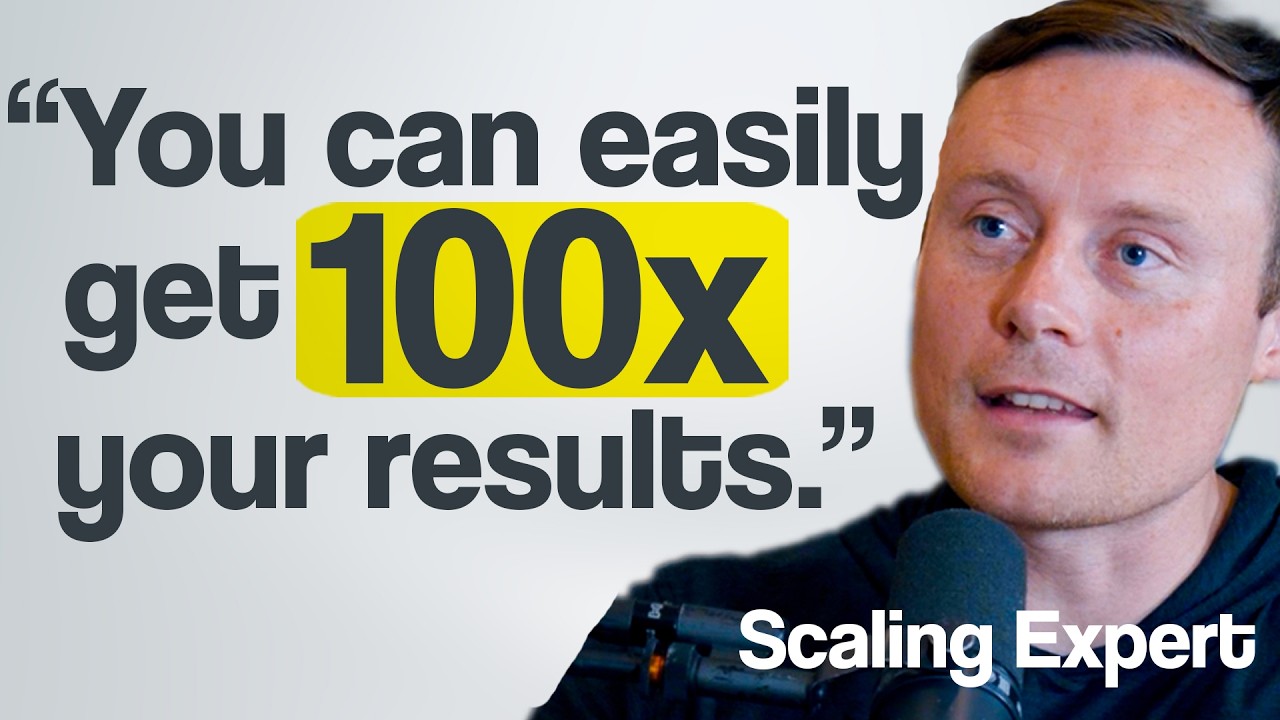
- Most entrepreneurs could 100x their outcomes with sharper focus.
- Too many simultaneous objectives dilute your energy and results.
- Impossible goals clarify what’s essential—and what’s not.
“Set a goal so big that you don’t think you can hit it.”
In the end, the Science of Scaling Book approach isn’t about wishful thinking. It’s about using impossible goals as a filter. They become your best friend by showing you what matters, and your worst nightmare by forcing you to let go of everything else. If you want to master Scaling Business 2025 and beyond, start by setting a goal that makes you uncomfortable—and watch how it changes everything.
Less is the New More: Ruthlessly Cutting to Scale
Scaling your business isn’t about doing more—it’s about doing less, but better. The counterintuitive truth is that cutting distractions in business is often the most effective business scaling strategy you can implement. This means letting go of “good” opportunities to make room for the truly great ones, even if it feels uncomfortable or goes against popular advice.
Case Study: From Many Paths to One Powerful Focus
Consider the journey of Ben Hardy, who made a radical shift by selling off a $20,000/year coaching company and stepping away from social media, masterminds, and even consulting for big companies. Over five years, his info products served 20,000+ students, but he realized that spreading himself across multiple ventures was diluting his impact. Instead, he doubled down on writing books and developing the new field of strategic psychology. This wasn’t just a pivot—it was a deliberate act of subtraction.
“Power requires focus.”
Hardy’s experience highlights a key insight: even smart, profitable activities can become distractions if they aren’t the highest-leverage moves for your business. True scalable systems and processes emerge when you ruthlessly strip away the non-essentials.
The 80/20 Principle in Action
The 80/20 principle states that 80% of your results come from 20% of your efforts. When scaling, this means identifying and focusing on the high-leverage activities that drive exponential growth. Hardy’s decision to focus exclusively on books and strategic psychology was a real-life application of this principle. He recognized that while he could do many things well, only a few activities would truly move the needle.
Creativity (and Profit) in Deleting Your To-Do List
There’s a hidden creativity in deleting most of your to-do list. By removing non-essential projects—like endless content creation, brand management roles, or constant social media updates—you create space for deeper work and more scalable results. Hardy’s personal experiment of stepping away from the usual online hustle for a year led to greater clarity and more impactful output.
- Stop posting 17 times a day on social media.
- Say no to every mastermind and networking event.
- Cut back on managing multiple brands or side projects.
These aren’t just productivity hacks—they’re strategic decisions that free up your energy for what matters most.
Stress Test: Narrowing Your Goals to Three
Try this real-life stress test: limit your focus to just three core goals. It’s uncomfortable at first, but transformative. You’ll quickly see which projects are truly essential and which are just “busy work.” This ruthless prioritization is often the gateway to exponential results and scalable growth.
Scaling isn’t about addition—it’s about subtraction. Recognize when even smart activities are distractions, and have the courage to cut them. The path to a scalable business is paved with the things you choose not to do.
From Shotgun to Laser: Finding Your Growth Game Plan
Most entrepreneurs believe they’re focused—until they step back and see the reality. It’s easy to convince yourself that juggling a YouTube channel, a coaching business, consulting gigs, and writing books is all part of a synergistic Growth Game Plan. But in truth, this “shotgun” approach scatters your energy and resources, making Scaling Business Profitable Growth much harder than it needs to be.
Confession: The Illusion of Synergy
It’s common to fall into the trap of thinking that related projects automatically support each other. You might tell yourself that every new channel or side project is another pathway to your goal. But as one mentor bluntly put it, “You are not focused.” When you honestly map out your activities, you’ll often find that what feels like synergy is actually a web of distractions. The more you do, the less impactful each effort becomes.
Mentor Intervention: Ruthless Honesty About What Moves You Forward
Getting outside feedback is crucial. A mentor can help you see where your time and energy are truly going—and which activities are actually driving your business forward. As one expert observed,
“My feeling is people who are very talented, even very talented entrepreneurs, could be getting 100x the results if they focused.”This kind of honest assessment is the first step toward building scalable systems and a step-by-step business scaling process that actually works.
Operational Changes: Upgrading or Removing What Holds You Back
When you set an “impossible” goal—like building a $100 million company by 2027 instead of 2030—you’re forced to confront the weak links in your organization and yourself. Suddenly, roles and processes that seemed fine for the long haul become obvious bottlenecks. For example, a brand manager role that’s “good enough” for slow growth might need to be eliminated or radically upgraded for rapid scaling. This is where you move from a shotgun approach to a laser-focused Growth Game Plan: every role, process, and project must directly support your main objective.
- Identify which activities truly drive profitable growth.
- Remove or upgrade roles that aren’t designed for your endgame.
- Streamline processes to support step-by-step business scaling.
Psychological Lift: The Relief of Laser Focus
There’s a surprising benefit to this ruthless focus: relief. When you stop spreading yourself thin and commit to a clear, laser-like business vision, stress drops and momentum builds. You’re no longer weighed down by a dozen half-finished projects. Instead, your energy is concentrated on what matters most, making it easier to build scalable systems and achieve profitable growth.
Compressing your timeline exposes what’s not working. If you had to reach your biggest goal in half the time, what would you cut? What would you double down on? This is the essence of finding your true Growth Game Plan: moving from scattered effort to focused execution, and from busywork to real impact.
FAQ: Scaling with Focus – Answers to Your Burning Questions
Scaling your business isn’t just about doing more—it’s about doing what matters most. When you set impossible goals, you’re forced to cut through the noise and focus on what truly drives growth. Here, we answer the most common questions about Step-by-Step Business Scaling, Goal Setting Business Success, and the Strategic Psychology of Entrepreneurship that can help you grow smarter, not just bigger.
What if all my projects feel essential?
It’s easy to believe that every project is crucial, but the reality is: if everything matters, nothing does. The science of scaling and growth psychology both stress the importance of deliberate simplification over mindless expansion. As Ben Hardy’s experience shows, cutting distractions—even successful ones—can unlock your biggest growth. Clarity comes from setting a main goal and using it as a filter. Ask yourself: “If I could only achieve one thing this year, what would move the needle most?” Everything else is secondary.
Is there a step-by-step process for setting audacious business goals?
Yes, but it’s not always comfortable. Start by defining a goal that feels almost impossible—something that forces you to rethink your entire approach. For example, one entrepreneur set a 33-year goal to buy a European soccer team. When challenged to do it in just seven years, he had to question every assumption, from pursuing a PhD to running multiple businesses. This is the heart of Goal Setting Business Success: set a bold target, then reverse-engineer the steps, ruthlessly eliminating anything that doesn’t directly support that goal.
How do you deal with the fear (and ego pangs) of letting go?
Letting go of projects, roles, or even identities is tough. It’s natural to feel fear or a hit to your ego. But growth requires tradeoffs. As one podcast guest put it:
“Strategy. A big part of it is choosing the game you want to play and knowing how you’ll win there.”The discomfort is a sign you’re making real progress. Remember, every “no” frees up energy for a more important “yes.”
Can smaller teams scale successfully, or do you need more people?
Contrary to popular belief, Small Business Growth doesn’t always require a bigger team. In fact, smaller, focused teams often scale faster because they can adapt quickly and stay aligned on the core goal. Building scalable systems and continuously clarifying your main objective leads to better results than simply adding headcount.
Does ‘doing less’ actually work, or is it just one of those trendy business maxims?
Doing less isn’t just a trend—it’s a proven strategy. The most successful entrepreneurs and businesses grow by focusing on fewer, higher-impact activities. By deliberately narrowing your focus, you make scaling simpler (though not always easier). This approach forces you to build systems that support your main goal and to constantly reevaluate what’s truly essential.
In conclusion, scaling with focus means making hard choices, letting go of comfortable routines, and committing to a single, audacious goal. It’s not easy, but it’s the only way to achieve sustainable, step-by-step business scaling. Remember: clarity and simplification are your greatest assets on the path to business success.
TL;DR: Big, audacious goals aren't about ego; they're about clarity. If you want to scale your business, you need to focus like a laser, cut the noise, and get real about what actually moves the needle. Less is more – and more powerful.
Post a Comment