
Years ago, snorkeling off a coral reef, I startled a parrotfish who responded by spitting a cloud of sand right in my face—a reminder of how little we truly know about the lives beneath us. Today, we’re plunging deeper: from whales that fish with bubbles to octopuses outsmarting traps, what can you learn from the ocean’s most creative creatures? Prepare for a sideshow of the strange, the collaborative, and the stunningly smart.
Bubbles, Songs, and Teamwork: The Secret Language of Whales and Dolphins
When you listen to the ocean’s surface, you might hear more than just the waves. Beneath, a world of marine animal communication unfolds—one that relies on bubbles, haunting songs, and remarkable teamwork. These behaviors are not just fascinating; they reveal the deep intelligence and social bonds of whales and dolphins.
Bubble Net Feeding: Precision and Social Bonds
In the cold inlets, the air often echoes with the mysterious songs of humpback whales. These songs are more than beautiful—they are a form of whale communication that helps coordinate one of the ocean’s most ingenious hunting strategies: bubble net feeding.
- A group of up to a dozen humpback whales works together to harvest schools of herring.
- Each whale has a specific role. The lead whale dives first and becomes the “bubble blower,” locating the fish and releasing a net of bubbles to encircle the prey.
- Other whales follow in a precise formation, taking the same position in every lunge.
- One whale emits a haunting call, synchronizing the group’s movements.
The bubbles form a curtain that traps the fish, while the eerie calls keep the team coordinated. The fish, panicked by the fizzing wall and strange sounds, stay trapped until the whales surge upward together to feed. As few as 100 humpbacks worldwide have mastered this technique, showing that marine animal communication behaviors can be rare and culturally transmitted.
“Such fishing requires an extraordinary level of intelligence and cooperation.”
Acoustic Communication: Songs, Clicks, and Calls
Whales and dolphins rely heavily on acoustic communication. Their songs, clicks, and calls serve many purposes:
- Coordinating group hunting
- Navigating vast ocean spaces
- Attracting mates
- Maintaining social bonds
Each sound has its own context and meaning, forming a complex language that scientists are only beginning to decode.
Bottlenose Dolphin Hydroplaning: Creativity in Shallow Waters
In Western Australia, bottlenose dolphins face a unique challenge: their prey hides in water just centimeters deep. Traditional methods like tail slapping do not work here. Instead, a few creative dolphins have developed the hydroplaning technique:
- Dolphins pump their tails rapidly to build speed.
- They slide, or “hydroplane,” across the shallow water, chasing fish onto the shore.
- This risky maneuver puts them in danger of stranding, but it allows them to catch otherwise unreachable prey.
Remarkably, only eight dolphins in this region have mastered hydroplaning, highlighting how marine animal communication behaviors and hunting techniques can be learned and passed on within small groups—much like culture in human societies.
Teamwork and Culture Among Marine Mammals
Teamwork is rare among large predators, but whales and dolphins show how whale communication and acoustic communication support advanced group hunting. These behaviors are not instinctive for all individuals; instead, they are learned, shared, and sometimes kept within a select few. This makes the ocean’s secret language one of its most surprising wonders.
Thinking Outside the Shell: Octopuses, Crabs, and the Art of Underwater Problem-Solving
When you picture a crab fisherman like Steve, the basics seem straightforward: drop a baited pot to the seafloor, wait, and haul up a catch. Most crabs, lacking much in the way of intelligence, simply wander in and rarely find their way out. The exit is obvious to us, but for many crustaceans, the trap becomes a one-way door. As Steve knows, “most crustaceans aren’t known for their IQ.”
But the ocean floor tells a different story. Sometimes, what should be a simple haul turns into a puzzle, with traps emptied and only a “trail of empty shells and a frustrated fisherman” left behind. The culprit? Not another human, but a master of marine life intelligence and cooperation: the Giant Pacific Octopus.
Giant Pacific Octopus Intelligence: Outsmarting the Trap
The Giant Pacific Octopus is not your average sea creature. While its closest relatives are slugs, snails, and clams, it stands apart with one of the largest brain-to-body ratios among invertebrates. This animal’s brain is not just big—it’s distributed. Remarkably, two-thirds of its neurons are found in its tentacles, not its head. This unique setup allows the octopus to use tactile communication and manipulation skills that crabs can’t even imagine.
- Problem-solving: When a crab trap blocks its path to an easy meal, the octopus doesn’t give up. If smothering the prey from outside fails, it quickly adapts, finding new ways to break in and feast.
- Flexibility: The octopus can squeeze through tiny gaps, explore with its sensitive arms, and even learn from past experiences—qualities that leave crabs and lobsters far behind.
Tactile and Chemical Communication: The Secret Weapons
Unlike crabs, which stumble blindly into traps, the Giant Pacific Octopus relies on a combination of tactile communication and chemical communication to explore its world. Each arm is packed with neurons, giving the octopus a kind of distributed intelligence. It can taste, touch, and sense its environment in ways that let it solve problems on the fly. When it comes to hunting or escaping, these senses help the octopus improvise and exploit every opportunity.
Crab Graveyards and Frustrated Fishermen
For local fishermen, this intelligence is both fascinating and frustrating. Traps that seem foolproof to humans are often no match for a determined octopus. The result? “A sure sign that an octopus has struck: a trail of empty shells and a frustrated fisherman.” These “crab graveyards” on the seafloor are silent evidence of the octopus’s creative problem-solving skills.
Marine life intelligence and cooperation aren’t divided neatly by species. While crabs and lobsters stumble about, the Giant Pacific Octopus rewires its approach, adapts to new challenges, and leaves its mark on both the ocean floor and the people who make their living above it.
Hidden Cities, Fierce Feasts: Shipwreck Stories and the Great Ocean Buffet
Yongala Shipwreck Biodiversity: A Sunken City of Life
Step beneath the waves at the Yongala shipwreck and you’ll find a city teeming with life. Soft corals blanket every inch of the wreck’s hull, transforming it into a living skyscraper. These corals are more than decoration—they are a refuge for millions of small fish, each darting in and out to feed on plankton swept in by strong currents. As one observer put it,
“The amount of marine life to be found in the hundred meters of the wreck of the yongala is truly staggering.”This site supports one of the densest concentrations of life on the entire Barrier Reef, making it a hotspot for marine biodiversity.
Predators at the Buffet: Tarpon Feeding Frenzy Behavior and Sailfish Group Hunting Strategies
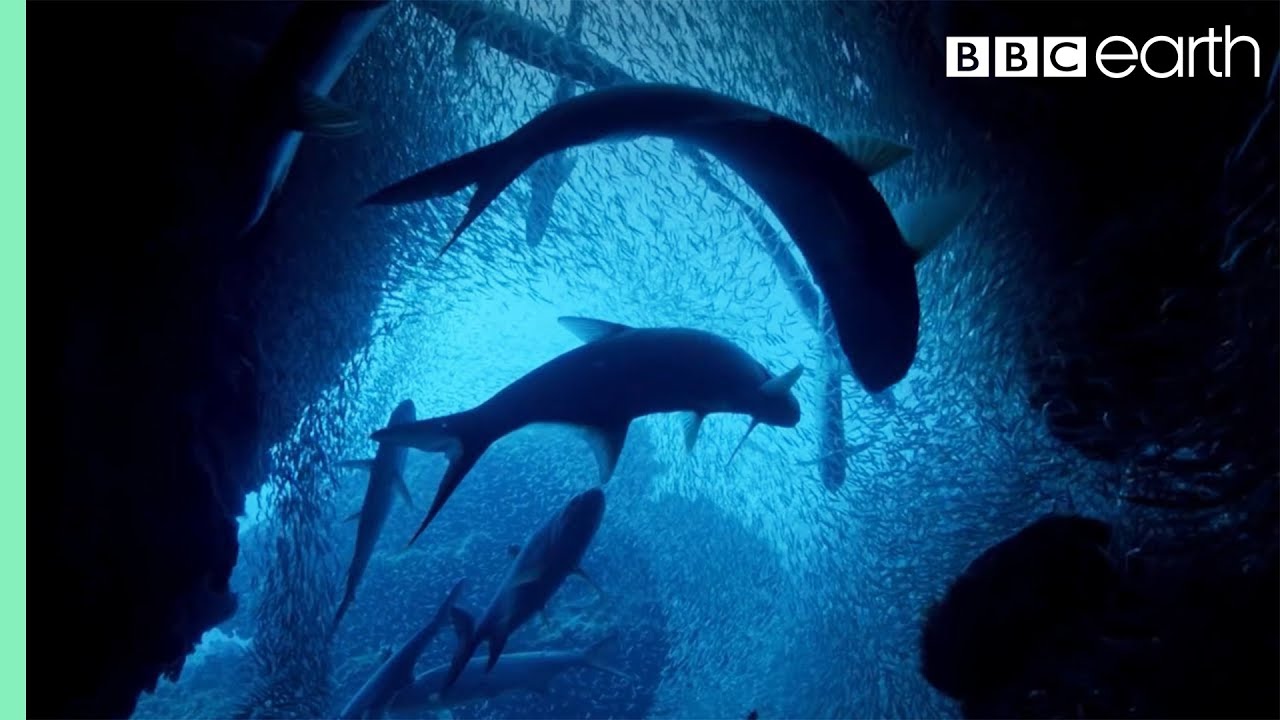
Where small fish gather, larger hunters soon follow. The Yongala’s residents include goliath Queensland groupers—some as big as a car—and venomous sea snakes, all hunting side-by-side. But the spectacle doesn’t end here. In other ocean hotspots, you’ll witness tarpon feeding frenzy behavior. These silver giants can accelerate up to 60 km/h, using explosive speed and cavernous jaws to swallow prey whole. As more baitfish gather, more tarpon arrive, creating a swirling, high-speed feast.
Out in the open ocean, sailfish group hunting strategies are a masterclass in teamwork. Nearly a hundred sailfish may encircle a single school of baitfish, raising their massive dorsal fins to herd their prey. They flash colors—blue, striped, black—to warn companions and confuse their quarry. Each strike is carefully timed, minimizing wasted energy and avoiding injury to fellow hunters. The result is a coordinated chaos, with dolphins and sharks sometimes joining in, corralling sardines into tight balls for a shared banquet.
Odd Neighbors: Pearl Fish Sea Cucumber Symbiosis and Spiny Lobster Migration Patterns
Not all ocean alliances are about competition. Some are about survival through partnership. The pearl fish sea cucumber symbiosis is a curious example. Pearl fish, vulnerable in the open, slip inside sea cucumbers—entering through the rear end—to find shelter. The sea cucumber is unharmed, and the pearl fish gains a safe home, sometimes sharing the space with others in a rare show of mutual tolerance.
Elsewhere, spiny lobster migration patterns reveal another type of alliance. Each year, lobsters march in long lines across the lagoon floor, sometimes 60 strong. Traveling in columns reduces water drag and allows them to form defensive circles if threatened. This group migration is both a survival tactic and a moving feast for predators like triggerfish, but together, the lobsters stand a better chance.
Symbiotic Relationships: The Ocean’s Ever-Shifting Alliances
From the bustling Yongala shipwreck to the open ocean’s hunting grounds, you witness a world where symbiotic relationships are everywhere. Some are mutual, like pearl fish and sea cucumbers; others are opportunistic or competitive, like the coordinated attacks of dolphins, sharks, and seabirds on sardine shoals. Observing these micro-ecosystems is like peering into a city at rush hour—every creature has a strategy, a role, and a knack for survival in the great ocean buffet.
Ocean Oddballs: Survival, Drama, and Lasting Impact
Survival in the ocean is never simple. It’s not just about being the biggest, fastest, or smartest. Instead, it’s a blend of creativity, teamwork, and sometimes sheer luck. When you look closely at the lives of polar bears, Antarctic penguins, and hump-head parrotfish, you see how each species has developed unique ocean survival strategies and behaviors that shape not only their own fate but the world around them.
Take the polar bear, for example. In the frozen north, every hunt is a gamble. On average, a polar bear succeeds only once in twenty hunts. For a skinny bear, that’s a dangerous statistic. Yet, the bear never gives up. She circles wide to avoid her scent giving her away, then creeps close, inch by inch, until she’s right behind her prey. When she finally catches a seal underwater, it’s a small victory with huge rewards. As one observer notes,
“Its blubber alone will contain a hundred thousand calories—enough to sustain this bear for a week.”But the drama doesn’t end there. As summer warms the ice, each hunt drains more energy, and the bear must keep trying, knowing that luck and timing are as important as skill. This is the essence of Polar Bear Hunting Strategies: patience, persistence, and the ability to adapt to a changing environment.
Meanwhile, on the opposite end of the world, emperor penguins gather at the edge of the Antarctic ice, facing their own high-stakes challenge. Leopard seals lurk beneath the surface, waiting for a chance to strike. The penguins hesitate, crowding together, each unwilling to be the first to dive. Eventually, a few make a dash for the water, and if they’re lucky, they escape. But often, the seal is waiting, hidden behind the ice, ready to attack. Those who survive reach open water and safety, but the risk is always present. These Antarctic Penguin Survival Strategies rely on group coordination, timing, and sometimes the bravery of a single bird. The drama is real, and every escape is a testament to the power of teamwork and quick decision-making.
Not all ocean oddballs are predators or prey. The hump-head parrotfish is a surprising architect of the sea. With jaws strong enough to bite through rock, these fish feed on coral and algae, swallowing chunks of reef. What happens next is remarkable: the rock and coral pass through their bodies and emerge as fine sand. On a single reef, parrotfish can produce tons of sand every year. Over time, this sand builds up, forming the tropical beaches and even islands that become home to countless other species. This is the Hump-Head Parrotfish Ecosystem Impact—a reminder that even the most unusual habits can transform entire landscapes.
In the end, the ocean’s oddballs teach us that survival is more than just a contest of strength or intelligence. It’s about finding creative solutions, working together, and sometimes just being in the right place at the right time. Whether it’s a penguin calling to its chick, a polar bear risking everything for a meal, or a parrotfish quietly building the world beneath our feet, these stories remind us that the poetry of survival is everywhere—if you know where to look.
TL;DR: From cooperative whales to ingenious octopuses, the ocean is a masterclass in creativity, problem-solving, and communication. There’s more drama, teamwork, and wit beneath the surface than most landlubbers imagine.
Post a Comment