

Success isn’t about grinding harder or doubling down on self-control—at least, not if you want to hit the top 1%. I learned this the hard way: from homeless to running billion-dollar tech companies, my journey was less about discipline and more about designing sneaky systems that did the heavy lifting for me. What you’re about to read isn’t recycled inspiration—it’s field-tested advice (and a little tough love) for anyone tired of hearing, 'Just try harder.' Sit tight; we’re about to burn the boats and hack your habits for real lasting change.
Setting Fire to Plan B: How Forcing Functions Launch You Past the Comfort Zone
Imagine arriving on a foreign shore, outnumbered and uncertain, with everything at stake. In 1519, Spanish conquistador Hernán Cortés faced exactly this. With just a few hundred men, he landed in Mexico to conquer the mighty Aztec empire. The odds were impossible. So, what did Cortés do? He ordered his men to sink their ships. No retreat. No surrender. No Plan B. Because when you don't have a Plan B, you will find a way to make Plan A work.
The 'Burn the Ships' Philosophy: Creating No Way Out
This legendary moment is more than a dramatic story—it's a powerful success principle top performers swear by. The lesson? If you want extraordinary results, you must sometimes set fire to your escape routes. This is the heart of behavioral design: using forcing functions—deliberate constraints that push you beyond your comfort zone and into action.
Behavioral Science: Why Backing Yourself Into a Corner Works
Research shows that forcing functions work better than willpower alone. When you remove the option to quit or retreat, your brain stops wasting energy on backup plans and focuses all its power on making your primary goal succeed. Restricting choices actually increases focus and drive, leading to breakthrough results. This is why top performers often create points of no return—they know that real growth happens when you have no choice but to move forward.
Personal Story: My Own 'No Retreat' Moment
I learned this lesson firsthand in my career. When I was the chief operating officer at a large company, we acquired a business in a different city. Hundreds of new employees joined us, and the integration was complex—different people, cultures, systems, and customers. There were no direct flights from New York, and I hesitated, unsure if I should travel there often. Then my CEO put his hand on my shoulder and said, "Okay man, I'm not going there, you own it." Suddenly, there was no Plan B. I had to make it work. That pressure forced me to grow, lead, and deliver results I never thought possible.
What Are Forcing Functions? The Four Key Types
Forcing functions are intentional constraints that force growth and commitment. Here are four powerful types you can use:
- Public Commitment: Tell others about your goal so you can’t back out quietly.
- Financial Stakes: Put money on the line—if you fail, you lose it.
- Removing Access: Cut off distractions or alternatives that could tempt you away.
- Time Boxing: Give yourself a hard deadline to create urgency and focus.
Wild Card: What If You Had to Quit Your Job Tomorrow?
Imagine you had to quit your job tomorrow to pursue your dream. No fallback. No safety net. The thrill and terror you’d feel is the energy that forcing functions create. Top performers use these constraints not just to survive, but to thrive. They know that when you set fire to Plan B, you unlock a level of commitment and creativity that ordinary motivation can’t touch.
Because when you don't have a Plan B, you will find a way to make Plan A work.
Willpower Isn’t a Superpower: The Case for Outwitting Your Brain’s Limits
It’s 8:00 a.m. and you’re fired up. Today’s the day you’ll crush your to-do list, eat healthy, and finally tackle that project. Fast forward to 8:00 p.m.—you’ve renegotiated almost every goal, and you feel like you’ve failed. But here’s the truth: you haven’t failed. That’s just how our brains work. Understanding your willpower limitations is the first step toward real growth and lasting productivity.
Roy Baumeister’s Cookie Study: The Science Behind Willpower Limits
One of the most eye-opening success principles comes from psychologist Roy Baumeister. In his famous cookie experiment, participants were split into two groups. Both sat in front of freshly baked cookies. One group was told not to eat them; the other had no restrictions. Later, both groups faced a set of impossible puzzles.
You might think the group with more discipline would last longer. But the opposite happened. Those who resisted the cookies gave up on the puzzles 50% faster than those who didn’t have to resist. Why? Because resisting temptation drained their mental fuel. As Baumeister puts it:
"Our willpower isn't infinite, it's like a fuel tank."
| Study | Key Finding |
|---|---|
| Baumeister’s Cookie Study | Cookie resistors gave up on puzzles 50% faster |
| Judicial Parole Decisions | Parole denied more often in afternoons by judges |
Willpower Is Like a Smartphone Battery—Finite and Easily Drained
Think of your willpower like your phone’s battery. Every decision, every distraction, every temptation—it all drains your charge. By the end of the day, your mental battery is running on empty. This isn’t a character flaw; it’s biology. Productivity principles that ignore this reality set you up for disappointment.
Fun Hypothetical: The 3 p.m. Chocolate Cake Test
Imagine your smartphone bombards you with chocolate cake ads at 3 p.m.—right when your willpower is lowest. What chance does sheer determination have? Not much. That’s why top performers don’t rely on willpower alone; they design systems that make success easier, even when their mental fuel is low.
Real-World Proof: Decision Fatigue in High-Stakes Situations
It’s not just you. Even judges—trained to be impartial—show willpower limitations. Studies reveal that judges deny parole far more often in the afternoon than in the morning, simply because their mental resources are depleted. The facts of the cases don’t change, but their decisions do. This is decision fatigue in action, and it impacts productivity and outcomes everywhere.
Personal Tangent: The Myth of the ‘Heroic Push’
I used to believe in the all-nighter, the heroic push to get things done. But every time, I’d crash—motivation gone, productivity tanked. I wasn’t weak; I was just running on empty. Many personal failures tie back to overrelying on willpower instead of building smarter systems.
Break Free: Design Around Willpower Limits
Here’s the growth mindset shift: Stop treating willpower as your superpower. Instead, recognize its limits and build routines, habits, and environments that make the right choices automatic. Outwitting your brain’s limits isn’t cheating—it’s the ultimate productivity super-move.
The Secret Weapon of Top Performers: Reliable Routines and If-Then Planning (with a Table)
What separates Olympic champions from the rest of us? It’s not superhuman willpower. It’s the power of reliable routines and the science of if-then planning. Noah Lyles, the world’s fastest man, doesn’t chase discipline—he engineers it. Diagnosed with ADHD, Lyles knows better than to trust fleeting motivation. Instead, he trusts his internal rhythm, building a system so reliable that when the starting gun fires, he doesn’t have to think. As he puts it:
“That’s not discipline. That’s design.”
Olympic-Level Routines: Why Noah Lyles Never Relies on Willpower
Six days a week, Lyles hits the same track, listens to the same playlist, and follows the same warm-up. Every movement is rehearsed. When it’s time to race, his body already knows what to do. He’s not fighting his biology—he’s using it. In a sport where the difference between gold and silver is one five-hundredth of a second, these routines are his secret edge.
Mini-Wild Card: What My Playlist Reveals About My Most Productive Days
Here’s something strange I’ve noticed: my most productive days almost always start with the same playlist. It’s not just background noise—it’s a trigger. The right song cues my brain that it’s time for deep work. This personal quirk has become a built-in productivity switch, just like Lyles’s track routine. What’s your trigger?
Peter Gollwitzer’s NYU ‘If-Then’ Study: Engineering Habits That Stick
Psychologist Peter Gollwitzer at NYU wanted to know why some people stick to their habits while others fall short. He split students into two groups over Christmas break. One group set vague goals (“I want to work out more”). The other group used if-then planning: “If it’s Monday at 7:00 a.m., then I’m at the gym.” Both groups were equally motivated. The results? Staggering.
| Approach | Failure Rate | Routine Example |
|---|---|---|
| Goal Setters | 62% | “I want to work out more.” |
| If-Then Planners | 9% | “If it’s Monday at 7am, I’m at the gym.” |
| Daily Routine Ideas for Readers | ||
|
||
Simple Systems, Unbreakable Habits
Why does if-then planning work so well? Because it’s simple. When you lock in the time, place, and trigger, you don’t have to think or negotiate with yourself. You’re on autopilot. As Lyles proves, routine design is the hallmark of elite performers.
Tip: Try One Weirdly Specific If-Then Rule
Pick your hardest habit. Design one “weirdly specific” if-then rule for it. Maybe it’s “If I pour my morning coffee, then I open my journal.” The more specific, the more reliable. Simple cues activate task completion automatically—no willpower required.
Checklists, Outsourcing Decisions, and Why ‘Experts’ Need More Structure—Not Less
When you think of success principles, you might picture grit, hustle, or raw talent. But the real game-changer? Structured planning—specifically, checklists. Atul Gawande, a world-renowned surgeon, discovered this the hard way. While researching surgical errors, he found something shocking: even the best surgeons made preventable mistakes. Not because they lacked skill, but because under pressure, their task execution became uneven. The solution wasn’t more training or fancier tools. It was a simple, 19-step checklist.
Atul Gawande and the 19-Step Surgical Checklist: Simple Beats Sophisticated Under Pressure
Gawande worked with the World Health Organization to create a checklist for surgery. You’d expect it to be highly technical, but it included basics like:
- Confirm the patient’s identity
- Ensure antibiotics are given
- Mark the correct limb for surgery
It sounds elementary, but when hospitals adopted this system, post-surgical complications dropped by 36% and deaths by 47%. As Gawande put it:
"Same surgeons, same skills. Just a simple checklist as a safety net."The checklist didn’t make them better surgeons—it made them more consistent, especially when their cognitive load was at its peak.
Real Talk: Why My Best Days Start With a Crumpled Sticky Note
Let’s get personal. My most productive days don’t start with a fancy digital task app. They start with a crumpled sticky note—my analog checklist. Why? Because outsourcing decisions to a simple, visible list frees up my mental bandwidth. Structured planning isn’t about restriction; it’s about clarity and focus. It’s the same reason pilots with 10,000+ hours still use pre-flight checklists every single flight.
Before-and-After: The Checklist Effect in Surgery and Aviation
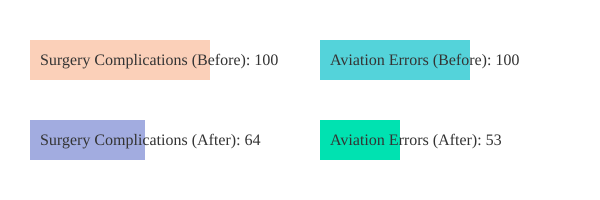
Checklists cut errors and complications dramatically in both surgery and aviation.
Three Checklists for Your Life: To-Do, To-Want, To-Be
- To-Do: The classic list for daily task execution. Keeps you on track and focused.
- To-Want: A list for your goals, dreams, and things you desire. It helps guide your outsourcing decisions—what to delegate, what to chase.
- To-Be: Who do you want to become? This list shapes your habits and identity, reminding you of your bigger purpose.
Use these checklists not just for productivity, but for intentional living.
Why Experts Swear by Checklists: Pilots, Surgeons, CEOs
Checklists aren’t just for beginners. The more advanced you get, the more you need structure. Pilots, surgeons, and top CEOs all use checklists to ensure nothing critical slips through. Structured planning and outsourcing decision-making to systems let you focus on what matters most—solving hard problems and being creative.
Quick Tip: How to Create a Checklist That Doesn’t Feel Like Corporate Red Tape
- Keep it short—only the essentials.
- Make it visible—sticky notes, whiteboards, or paper work wonders.
- Review and update regularly to keep it fresh and relevant.
Remember: structure isn’t a cage. It’s your safety net for success.
Becoming the System: How Repetition Transforms Who You Are (Plus, a Brainwave Dive)
What if the secret to motivation and personal growth wasn’t about willpower at all? Top performers know something most people miss: success principles are built on systems, not on bursts of inspiration. Let’s dive into how motivation through repetition rewires your brain, and how you can use this power to create habits that transform your life.
Harvard’s Brainwave Discovery: The Power of Repetition
Consider this: Harvard researchers scanned the brains of Tibetan monks during deep meditation. The results were astonishing. Across all the monks, their brainwaves were perfectly synchronized—in rhythm, as if they were a single mind. But here’s the catch: these monks weren’t trying to focus or force motivation. They weren’t even aiming to sync their brainwaves. Instead, years of repetition—the same meditation, day after day—had gently shaped their nervous systems. Their brains had learned the pattern so deeply that it became automatic, a beautiful resonance born from consistency, not effort.
Roger Federer’s Serve: The Illusion of Effortlessness
Think about Roger Federer’s legendary tennis serve. Watching him, it looks effortless—almost magical. But what you don’t see are the thousands and thousands of repetitions behind that single, smooth motion. Federer didn’t rely on motivation every day. He built a system. Over years, his brain and body learned the pattern so well that the serve became second nature. This is the hidden truth of personal growth: what looks easy is the result of relentless, steady practice.
My Oatmeal Ritual: Tiny Habits, Big Change
Let me share a personal example. I used to struggle with sluggish mornings. Then, I turned making oatmeal into a sacred ritual. Every day, same time, same steps. At first, it was just breakfast. But after a few weeks, my brain started craving the ritual. The smell of oats, the sound of the kettle—these cues pulled me into action before I even thought about it. Suddenly, my mornings felt productive and joyful. This is how creating habits works: repetition wires your brain to crave the cue, not just the reward.
Motivation Follows Repetition—Not the Other Way Around
"Motivation doesn't drive repetition, repetition drives motivation."
Most people wait for motivation to strike before starting. But science—and the world’s top performers—show the opposite. When you repeat an action enough times, your brain learns to predict the rhythm. It starts to crave the habit cue itself. Over time, you don’t have to push yourself; your biology begins to pull you forward. This is the magic of motivation through repetition.
Design Your Own Success Cue
If you could design one ‘cue’ that turns on your best self automatically, what would it be? Maybe it’s a song, a scent, or a phrase you say to yourself. The key is to pair that cue with a repeated action. Over weeks, your brain will start to light up at the cue, drawing you into the habit without effort. This is how systems shape who you become—one repetition at a time.
The Art of Tiny Rule-Breaking: Making Micro-Changes That Stick
When it comes to creating habits and mastering productivity principles, most people dream of overnight transformation. You might tell yourself, “Tomorrow, I’ll wake up at 5 a.m., run five miles, eat only salads, and finish my to-do list before noon.” But let’s be honest—these grand plans rarely last past the first day. Why? Because willpower is like a phone battery: it drains fast, especially when you try to change everything at once.
Why Overnight Transformations Fail (But Micro-Changes Gain Traction)
Research shows that small, specific habit changes are far more likely to stick. In fact, studies on habit change reveal that “tiny habits” have the highest adoption rates over 30 days. The reason is simple: micro-changes lower the psychological barriers that make big changes feel overwhelming. When you shrink your goal to something almost laughably easy, your brain doesn’t resist—it gets curious.
Surprising Example: The ‘No Shoes After Sunset’ Rule
Let me share a quirky story. My friend struggled for years with poor sleep and low mood. She tried all the usual advice—no screens before bed, herbal teas, meditation apps—but nothing stuck. Then she invented a micro-rule: no shoes after sunset. It sounded silly, but it worked wonders. Taking off her shoes became a signal to slow down, relax, and prepare for rest. Within a week, her sleep improved and her mood lifted. That one odd rule snowballed into a nighttime routine that changed her life.
Invent Simple, Odd Rules That Stick
Here’s the secret: playful or odd rules disrupt your routine patterns, making habit formation easier. When you create a rule that’s a little unusual, you spark curiosity and novelty in your brain. This triggers a reward loop, making it more likely you’ll repeat the behavior. Over time, these micro-rules become automatic, quietly rewiring your default settings.
- Want to overcome procrastination? Try a rule like, “I’ll write one sentence before checking my phone.”
- Need a boost in productivity? Make a rule: “Every time I refill my coffee, I’ll clear one item from my desk.”
- Looking to improve your mood? “Every time I walk through a doorway, I’ll smile—just for me.”
Quirky Prompt: Design Your Own Micro-Rule
Ready to try it? Design a rule so small it feels almost silly, then try it for a week. Maybe it’s “No phone in the bathroom,” or “Stand up every time I get a text.” The point isn’t the size of the rule—it’s the act of breaking your own patterns in a way that’s fun and easy to repeat.
"Design one tiny rule that changes your tomorrow. Build the right systems and those systems will build the right you."
How Systems, Not Superhuman Effort, Rewrite Your Default Settings
Top performers don’t rely on endless willpower. They build systems—tiny, repeatable rules that make success automatic. Success principles aren’t about heroic effort; they’re about clever design. When you start with micro-changes, you lower resistance, boost curiosity, and let your new habits grow quietly in the background. Over time, these tiny rules compound, transforming your life from the inside out.
Conclusion: Why Success is Weird, Uncomfortable, and Completely Yours
Let’s be honest: success is not a straight line, a perfect checklist, or a one-size-fits-all formula. It’s weird, it’s uncomfortable, and—most importantly—it’s completely yours. If you’ve ever looked at top performers and wondered why their high performance habits seem so odd or specific, you’re not alone. The truth is, the most powerful success principles are often the quirkiest. And that’s exactly what makes them work.
You Don’t Need More Motivation. You Need Better Systems.
Forget the myth that you just need to “want it more.” Research shows that systems reliably outperform motivation or willpower alone for sustainable success. Willpower fades. Motivation comes and goes. But systems—those repeatable routines and personal rules you design—stick around, quietly shaping your days and, eventually, your destiny.
"Build the right systems and those systems will build the right you."
Every top performer you admire has built their own set of odd rituals and weirdly specific constraints. Maybe it’s a writer who only works in 17-minute sprints, or an athlete who wears the same socks for every game. These aren’t random quirks—they’re custom-built systems. And they’re their competitive edge. The real secret? You can—and should—design your own.
Your Brain Is Not the Enemy: Give It Good Instructions
It’s easy to blame yourself for not having enough willpower or discipline. But your brain isn’t the enemy. It just needs clear, simple instructions—not endless pep talks. The best growth mindset isn’t about hyping yourself up. It’s about giving your brain a job it can actually do. That’s why the most effective personal growth strategies start with small, actionable rules. You don’t need to overhaul your entire life tonight. You just need to design one tiny rule that changes your tomorrow.
- Want to read more? Set a rule: “I read one page before bed.”
- Want to get fit? Set a rule: “I do five push-ups after brushing my teeth.”
- Want to write? Set a rule: “I write one sentence before breakfast.”
These micro-habits may seem almost laughably small, but they’re the seeds of high performance habits. Over time, your systems will do the heavy lifting. Your future self will thank you for starting small and staying consistent.
Embrace the Messy, Imperfect Path to Mastery
Here’s the funny thing about success: it never looks as tidy as the self-help books suggest. Every person’s path to mastery is idiosyncratic and requires self-experimentation. You’ll try things that don’t work. You’ll stumble. You’ll tweak your systems until they fit you like a glove. That’s not failure—that’s the process.
So tonight, don’t pressure yourself to change your entire life. Instead, design one tiny rule that nudges you forward. Make it so easy you can’t fail. Then let your systems do what motivation never could: carry you through the weird, uncomfortable, and totally unique journey of your own success.
Remember, your path is supposed to be a little strange. That’s how you know it’s yours.
Frequently Asked Questions: Odd Success Strategies, Answered
Can someone really reach the top 1% by designing systems?
Absolutely. Many top performers don’t rely on raw willpower alone—they build smart systems that make success almost automatic. Productivity principles like system design are about creating routines and environments that guide your actions, even on days when you feel unmotivated. Think of it as setting up a series of gentle nudges that keep you moving forward. When you focus on behavioral design, you’re not just hoping for the best; you’re engineering your daily life for consistent progress. Over time, these systems compound, helping you achieve results that seem out of reach for most. The top 1% aren’t always the most talented—they’re often the best at creating habits and sticking to systems that work for them.
What’s a forcing function and how do I create one?
A forcing function is a clever way to make sure you follow through on your goals. It’s a structure or commitment that leaves you no choice but to act. For example, scheduling a meeting where you have to present your progress, or setting a deadline with real consequences, are classic forcing functions. To create one, identify a goal, then design a situation where not taking action would be uncomfortable or impossible. This could be as simple as telling a friend you’ll owe them $50 if you don’t finish your task, or as formal as booking a public speaking slot before your presentation is ready. Forcing functions work because they bypass willpower limitations and make action the path of least resistance.
Do checklists kill creativity?
Not at all—when used wisely, checklists actually free up your mind to be more creative. By taking care of routine tasks with a checklist, you reduce mental clutter and decision fatigue. This leaves you with more energy and focus for creative thinking. The key is to use checklists for repetitive or essential steps, not for the parts of your work that require imagination or innovation. Many artists, writers, and entrepreneurs use checklists to handle the basics, so they can spend their best energy on what truly matters.
How small is too small for a habit change?
No change is too small. In fact, starting tiny is one of the most powerful productivity principles. If a new habit feels effortless, you’re more likely to stick with it. For example, if you want to start exercising, begin with just one push-up a day. Once that’s automatic, you can build up. The science of behavioral design shows that small wins build momentum and confidence, making bigger changes much easier over time. Remember, consistency beats intensity when you’re creating habits.
Should I worry about motivation or just focus on routines?
Focus on routines. Motivation comes and goes, but routines keep you moving forward regardless of how you feel. Top performers know that relying on willpower is risky—so they design daily routines that make progress inevitable. When your actions become automatic, you don’t have to waste energy deciding what to do next. Instead, you can use that energy for growth and creativity. Build routines that support your goals, and motivation will often follow.
Can behavioral design help me break procrastination cycles?
Yes, behavioral design is one of the most effective ways to overcome procrastination. By shaping your environment and routines, you make it easier to start tasks and harder to avoid them. For example, if you want to write more, leave your notebook open on your desk. If you want to cut distractions, use website blockers during work hours. The secret is to make good choices easy and bad choices inconvenient. Over time, these small tweaks add up, breaking the cycle of procrastination and helping you achieve more than you thought possible.
If you found these answers helpful, remember that success isn’t about superhuman willpower—it’s about smart strategies and consistent action. Keep exploring new productivity principles and behavioral design ideas, and you’ll find your own path to the top. For more insights, subscribe and check out my recent video on why you feel stuck and how to move forward. See you next week!
TL;DR: You don’t reach the top 1% by outworking everyone, but by outsmarting your own brain. Outsource your willpower, build ridiculous routines, and let repetition carry you when motivation gives out. Start with just one 'if-then' rule tonight—and let the systems do the heavy lifting from here.
Post a Comment